



















The Olympics have come and gone, and the NHL stretch drive has officially arrived.
There are all sorts of narratives flying around after the Olympic tournament, and all I’ll say is that we must be very careful when assessing a short tournament with a single-game elimination format, compared to the two-month grind of the NHL playoffs.
It was there in plain sight when the Florida Panthers’ players bounced between non-factor and actively unplayable for most of the Olympics. Sam Reinhart played under seven minutes in the gold game and tallied just two points in six games overall, and one of those points seemingly banked into the net off of him by accident. He has 39 points in 45 playoff games over the past two years, including two Cup rings, and this season he has 27 goals and 55 points in 57 regular-season appearances.
Mark Stone has 60 points in 41 games this season, but I had to try my best to find him on the ice each period at the Olympics. He racked up 24 points in 22 games when Vegas won the Cup and has been good in three other playoff runs that ended in conference finals appearances.
The examples are endless. Plenty of players either struggled or looked ordinary in the Olympic tournament, but they’re players you’d otherwise love on your team, especially for a playoff run.
Winning an Olympic gold is meaningful and important; it’s a significant achievement that shouldn’t be downplayed. But it’s not particularly transferable to the NHL playoffs because a seven-game series is significantly different — from facing the same matchups over and over, to the every-other-day toll, to the general physicality.
Sure, there are lessons to take moving forward, but as we saw last season with Mitch Marner, he set up the winning goal in the Four Nations final, but when the chips were down for Toronto in the playoffs, it was the same old, same old story.
In the 2016 World Cup of Hockey, Brad Marchand was named to the team despite never recording more than 61 points in his NHL career. He was excellent in the tournament, and it seemed to springboard him to the next level; he piled up 85 points that season and really took off as a point producer afterward.
“One of the things I’m most proud of is being part of the World Cup team with Canada,” Marchand said at the time. “It kind of put me on a different level, a different calibre of player. Before that, I never really thought I could play with guys who were on that team. I never put myself in the same category as anybody on that team. Coming out of that, I felt a lot more confident about my abilities and my game and where I could play in the league, and it just kind of elevated from there.”
These tournaments can, at times, lead to significant changes in a player. I don’t really think it applies to the Leafs after the Olympics, though; Team Sweden bowed out early, and OEL is turning 35. He has seen it all and already has a Cup ring, so for Nylander and OEL both, it’s not much of a conversation.
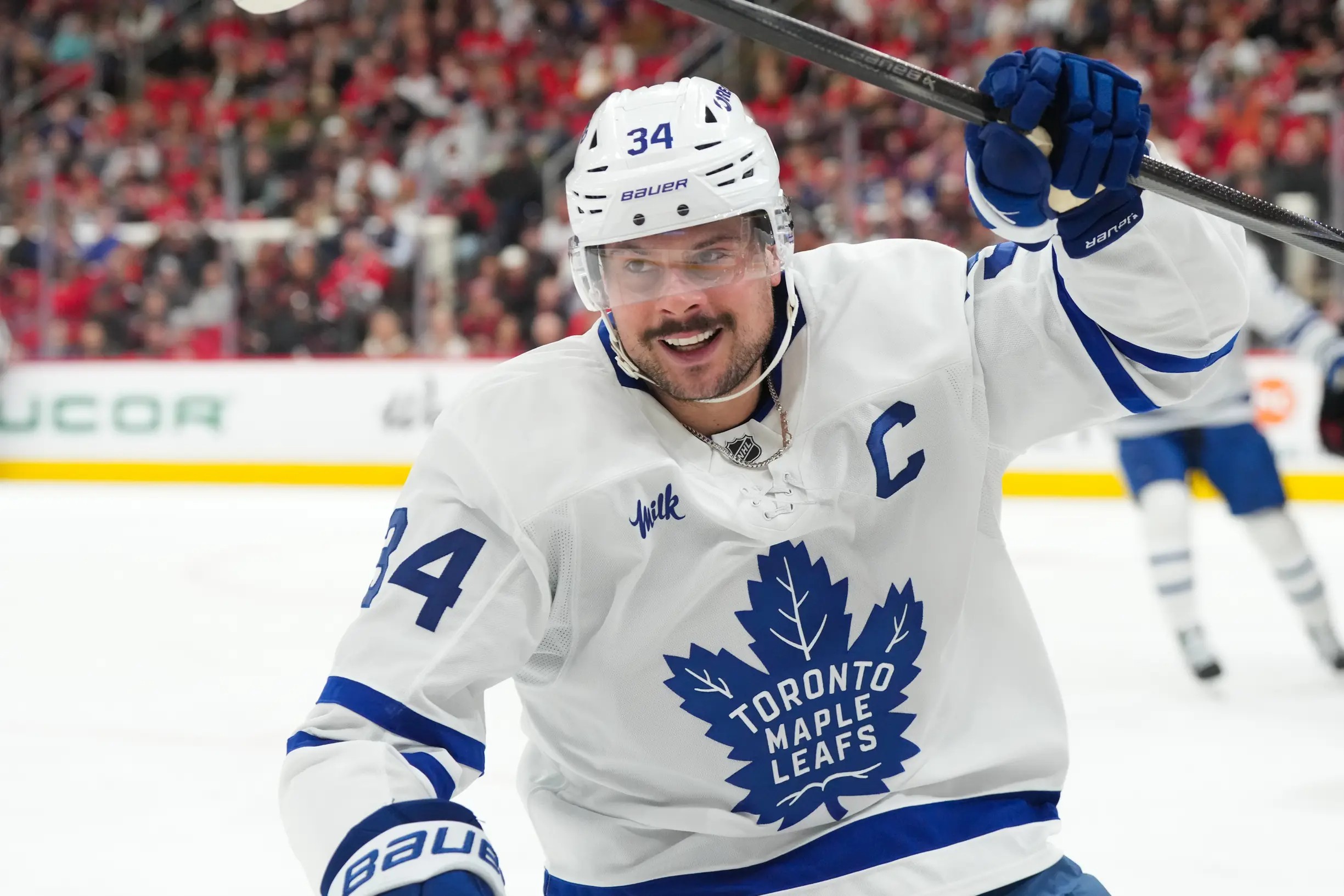
For Auston Matthews, who knows? I’d love to see it go to his legs and add some conviction to a late playoff charge with the Leafs. As it stands today, he’s the second-highest paid player in the league while producing 48 points in 51 games. There are 54 players in the league with more points than Matthews. Sure, there are some mitigating factors involved — from missing time to his linemates to Craig Berube’s system — but the production simply is not nearly good enough regardless.
Maybe this will provide Matthews with a little extra swagger and confidence to elevate his play down the stretch. It feels like grasping at straws, but the Leafs need all the help they can get right now, and it does start with Matthews, one way or another.
Notes
– In the first period of the gold medal game, Auston Matthews took a pass all alone in front of the net on the power play. It was on his backhand, so he definitely couldn’t have one-timed it, but he had time and all sorts of net to shoot it. He elected to pass instead, and while it would have been a tap-in if he connected, there was a defender there to break it up. It reminded me of his last game with the Leafs before the Olympics. He walked right out on the 5v3 in a prime shooting spot but tried some sort of strange pass to Matthew Knies, who had no chance of doing much with it:
The Leafs scored right after, so it didn’t get much play, but these are sequences where I would expect the player who has more goals than anyone since he entered the league to salivate and rip a shot. Instead, he’s actively passing out of them and almost feels a little trigger-shy. He is currently posting his lowest shot attempts and shots on goal per game rates over the past seven seasons. His shot has shown more zip over the past few months, but he still looks a bit hesitant to seize opportunities the way we became accustomed to, in part because he has set an incredibly high bar for himself.
– Since the Leafs fired Marc Savard, they’ve largely deployed Max Domi on the top line (which did start before Savard was fired, to be fair). In that time, Domi is second on the entire Leafs team in points with 19 in 23 games. He has played about as well as he can in that period, and his passing, coupled with his ability to hold pucks in the offensive zone to buy time for Matthews to get open, produces offense. Matthews leads the team in scoring in this period with 25 in 21.
Where it gets a little hairy: Despite all of that, Domi has been outscored 19-23 at even strength. A number of those goals featured suspect defensive efforts, like casually waving at Kasperi Kapanen while getting danced or waving at Travis Konecny as he curls one around him in the high slot. The production is great, but if he is ultimately outscored, where is the overall benefit? It’s easier to live with some of these warts when he is down the lineup, but this is the Leafs’ top line.
– In the same period, Bobby McMann has 10 goals in 22 games, second on the team next to Matthews. On defense, OEL leads the group with 12 in 22, five clear of the next highest scoring defenseman (Morgan Rielly), even though OEL isn’t playing on the top power-play unit.
– Not going to freak out about practice lines during the Olympics, but I was floored to see Rielly-Carlo, McCabe-OEL, and Benoit-Stecher together. Did they learn nothing from the five-game homestand where the team collected just one point? Going back to OEL on the main matchup/shutdown pairing makes absolutely no sense. There is no rationale for it, especially when OEL is on his off-side while Carlo and Stecher are viable options. I haven’t even touched on the Rielly-Carlo pairing that’s been outscored and generally outplayed, or the Benoit-Stecher pairing that didn’t click at all and resulted in Stecher playing way less than he should have, while the two pairings above him didn’t click.
– It will be interesting to monitor how many games Easton Cowan plays this week. He has not played since January 29, and he played just 9:44 in that game. He was ineligible to be sent down to the Marlies; they had him up with the team sit as a healthy scratch down the stretch instead. You can make an argument that Cowan needed some rest and a reset to some degree, but there’s really no reason to essentially take a month off at 20 years old when he isn’t injured. This break, instead of AHL time, treated Cowan like he was a true NHLer who has made it, instead of what he actually is: a work in progress who is very much still developing and learning.
– When Brad Treliving was managing the Flames, they didn’t develop Sam Bennett properly. They drafted him fourth overall; he tallied over 30 points just once in six seasons; he didn’t play in the AHL at any point; and they traded him for pennies on the dollar before he became a really good player elsewhere. Cowan does not have the same pedigree, but the development path to this point has been baffling. Hopefully, the break serves him well, and he comes back with jump, but this has been rather bewildering to this point.
– I’ll be very curious to find out if we see another post-break John Tavares heater. That would be really good news for the Leafs.
– Somewhat similarly, after Anthony Stolarz returned last season, he was up and down to start (three-game win streak, four-game losing streak), before locking in and reeling off an eight-game win streak to cement himself as the playoff starter. This season, he was shaky upon returning from injury before turning in an excellent performance in the last game before the break. It hasn’t been a good season for Stolarz at all, but he’s talented and easily capable of a heater.
– The Leafs are 27th in goals against per game despite owning the fifth-best penalty kill in the league. At the other end, they are 13th in goals per game despite ranking 22nd on the power play. Almost none of it makes sense.
– Six games until the deadline, the Leafs will play three division rivals this week. The Atlantic is the only division in the league where the Leafs actually own a losing record. If they miss the playoffs, two missteps stand out: the sweep by Detroit and the five-game homestand in which they collected one point. If the Leafs want any sort of leg to stand on regarding a playoff push, they need to win two of these next three games. There’s no easing into the return from the break.