

















As the Maple Leafs’ 2025-26 season slowly crawls to an end, all eyes have naturally shifted towards the offseason and the major question marks surrounding the organization’s future.
We started the conversation last week, noting the paths forward based on their current outlook for draft picks over the next three years. Some commenters, always keeping me honest, noted that the offseason conversation really starts with the President, front office, and coaching staff determinations. I assumed those decisions were rather obvious, but since then, a few eyebrow-raising conversations have made the rounds in the media.
On TSN Overdrive, Darren Dreger and Chris Johnston made a bizarre claim that “there’s a healthy realization from both Keith Pelley and the higher-ups that a lot of this is on the players.” David Pagnotta said he believes Brad Treliving is on a short leash, but indications are that he will return. James Mirtle speculated that Treliving is likely gone, but he still framed it as an open question.
We can question the validity of who is claiming what, and I generally believe there’s a lot more idle speculation than truth being spoken in most of these scenarios. Still, where there’s smoke, there’s fire, and it at least warrants a conversation.
Let’s start with the head coach.
Craig Berube
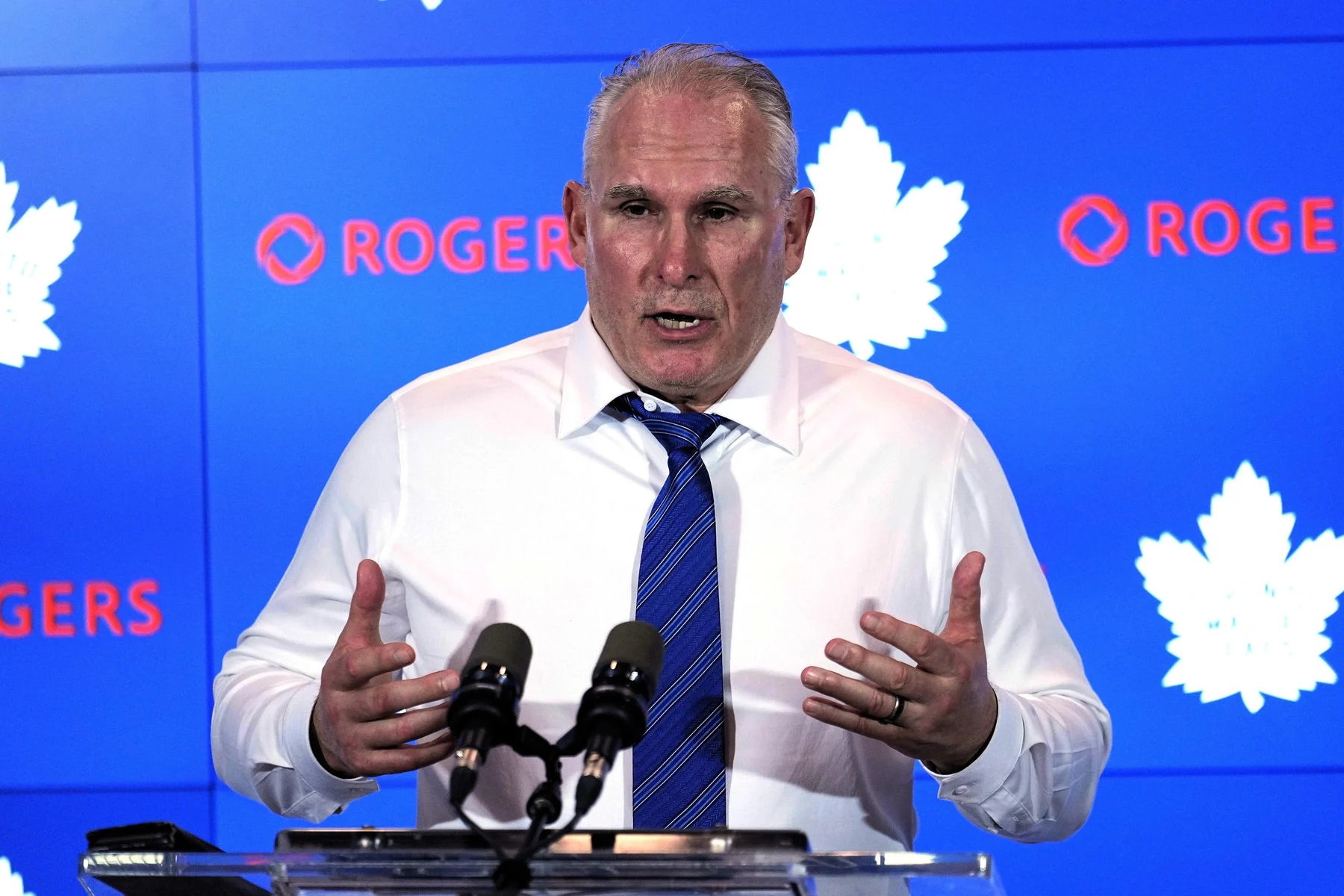
Hired and signed to a four-year deal in 2024, Craig Berube’s Leafs won the Atlantic Division for the first time in 2024-25 and achieved their most playoff wins in this era (a fairly modest seven). In fairness, they ran into the eventual Cup champions in round two and were really the only team in the postseason to fully test them. It’s a bit of a moral victory, but in terms of results, it’s a fact that Berube got the Leafs farther than any coach had before him.
The process behind those results, though, was questionable and largely unsustainable. The ’24-25 Leafs went an incredible 22-4-4 in one-goal games, an extremely difficult tight-game win rate to bank on year over year. Their results relied heavily on elite goaltending — they finished second in the NHL in save percentage — as the team was outshot in 62% of their games and went 33-12-2 in those contests. This was a Leafs team with a fully healthy Chris Tanev and Mitch Marner in a contract season, among all the other talent, yet they hardly ever owned the puck. Instead, they were fifth in the league in blocked shots and 29th in possession. The only three teams worse than them in possession metrics were the Sharks, Ducks, and Blackhawks, arguably the three worst teams in the league last season.
In the offseason, Marner left, and Tanev has essentially been a non-factor all season due to injury. Down their leading scorer and best defenseman from the previous year, it was naturally fair to expect the Leafs to take a step back. This part is out of Craig Berube’s hands and has essentially nothing to do with him. It would be unfair to blame the team stepping back squarely on Berube for those two reasons alone. Natural regression was already expected and then compounded by the Tanev injury.
The rest of it, though? The team has meaningfully declined in every key metric over the past two years. They rank amongst the worst teams in controlling the puck and scoring chances. A perennial top-10 scoring team in the Matthews era, the Leafs are now a mid-pack team in goals per game, and the supposed trade-off of better defensive play has not materialized; the Leafs rank third-last in goals against per game.
In January, when they were in the midst of a six-game losing streak, Berube noted:
“Sometimes, we just want to be too cute, in my opinion, and we can’t be. If we go back to last year, I think we put pucks deep the second or third most in the NHL. It is a winning recipe, and it is not an easy way to play. I am not going to sit here and admit it is, but it works.”
Berube has a clear idea of how he wants the team to play, and he’s not entirely wrong about it. In the playoffs, a team has to grind pucks in deep and forecheck effectively. Space is at a premium, and a team has to create it for itself and work the dirty areas. But hockey between October and January is not playoff hockey, and it doesn’t jive with the realities of an 82-game marathon. Their goalies made up for it last season, but in a season that required systemic changes and strategically adjusting their lineup to compensate for some key absences, he did neither.
When the Leafs lost Game 7 to Florida on home ice last spring, they were out-attempted a ridiculous 25-0 to start the game. It was complete territorial domination by the Panthers. Berube noted that the Leafs weathered the storm, a common refrain over his two seasons at the helm. But ask yourself this: If you are running a team with home ice in a do-or-die Game 7, should you be hoping to weather the storm, or should you set out to be the storm?
This past week against Carolina, after the Leafs gave up 78 shot attempts in a 4-3 overtime loss, Berube lamented that the team needed one more save from the goalie. He’s right in that it would have been nice for Joseph Woll to save a breakaway — that shouldn’t be an automatic goal! — but he’s missing the forest for the trees if he thinks it was the overarching problem in the game. And how can he solve a problem he’s not even identified correctly?
Individually, the Leafs’ franchise player has steadily trended down since Berube was hired, as he has insisted on hard-matching Auston Matthews come hell or high water, regardless of who his wingers are. Matthews is paid a lot of money and needs to be better — a coach can’t fully hunt matchups for a player of his calibre — but he plays significantly more difficult minutes than Nathan MacKinnon and Connor McDavid, while the Leafs pay him to produce among the league’s best, as he did prior to Berube’s arrival.
Rather quietly, William Nylander is hovering around a career year production-wise (1.2 points per game), while OEL hasn’t been this productive in seven years. Beyond those two — and Bobby McMann before he was traded — pretty well the rest of their roster is experiencing a down season. The goalies have struggled, everyone else on defense has either stagnated or flat-out struggled, and the forward group is a Rubik’s Cube of question marks and misplaced pieces. We can’t even look down the lineup at the lesser roles and conclude that any third/fourth liners are having strong 2025-26 seasons.
It could be argued in support of Berube that this is a personnel issue, but it is not a black-and-white situation, either. It was widely reported last summer that Berube was given a larger voice in player personnel decisions than most head coaches receive. Dakota Joshua, in particular, is a player Berube shares history with and whose profile fits what he wants, but he hasn’t exactly been a boon. When Berube was first hired, he talked about the desire for big defensemen who get in the way, and the team entered the season with the type of defense that he desired. They are big; they just can’t make plays with the puck.
The Leafs entered the season with four big wingers down the left in Matthew Knies, Bobby McMann, Dakota Joshua, and Steven Lorentz. There was a deep, veteran center group down the middle. There were lots of pieces in place that, on paper, meshed with what Berube wanted the team to be. Just because it hasn’t worked doesn’t mean that history needs to be rewritten on the team’s personnel makeup.
Who can forget Berube’s media availability at the beginning of training camp:
“I know Tre talked about DNA last year. I thought Tre did a hell of a job changing it over the summer, adding new players. I am excited to see how they fit in, how they look, and to try to find some chemistry with players.”
The lasting image of the Leafs’ DNA this season: the team standing around while captain Auston Matthews lay on the ice with a torn MCL from a dirty hit. No matter how much the players try to make up for it now, the damage was done.
In a coach’s first season, playing the rookie card might be valid, but it’s nearly two years into Berube’s tenure now — plenty of time to establish the standards and culture. If anything, at this point, the Leafs are actively regressing in those areas.
It would be hard to put together a logical argument for retaining Berube at this point. The style of play is poor, the vast majority of individual players are underperforming, and he doesn’t appear to have any real understanding of the underlying problems.
Brad Treliving
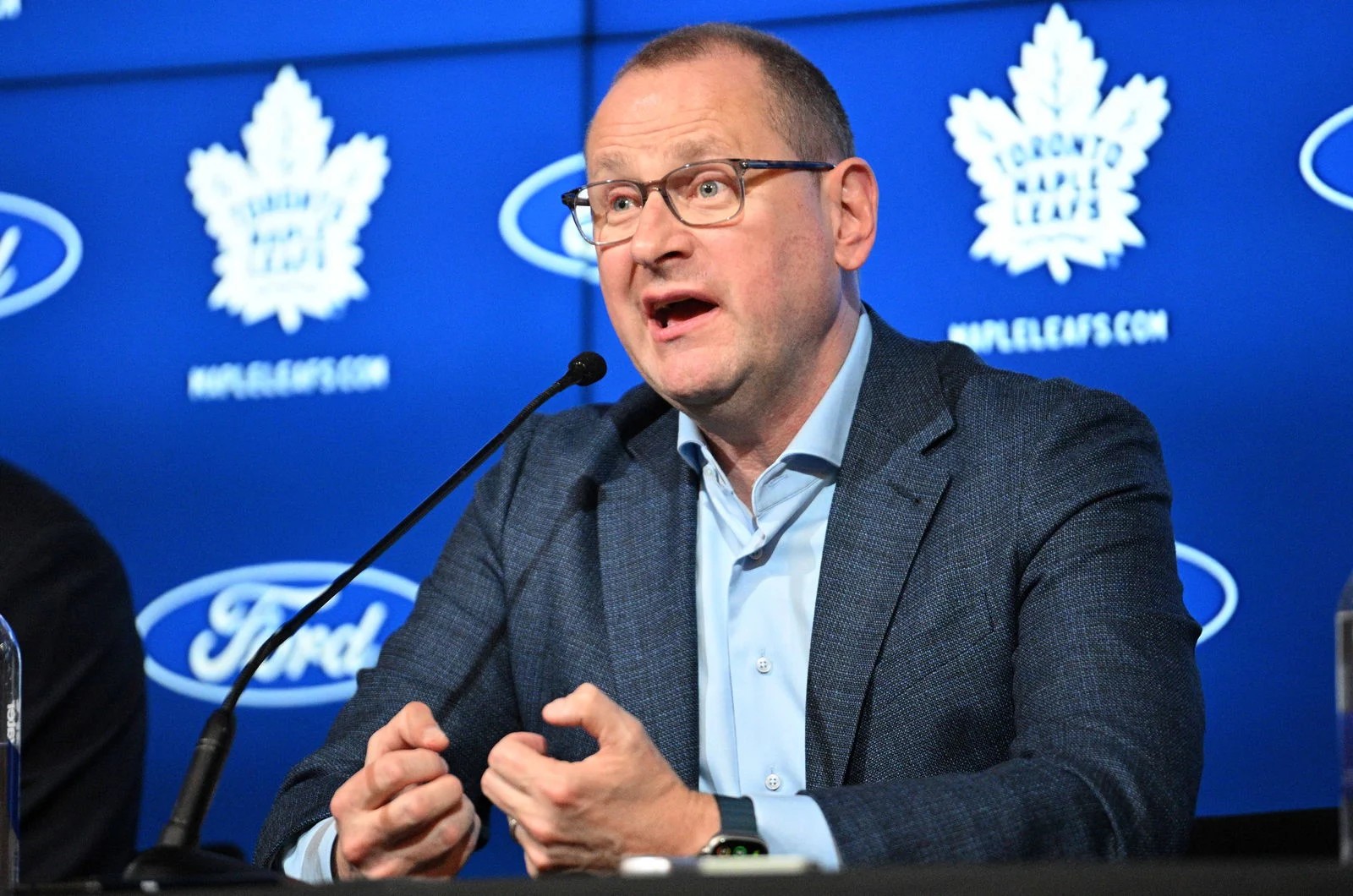
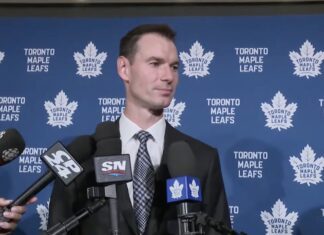
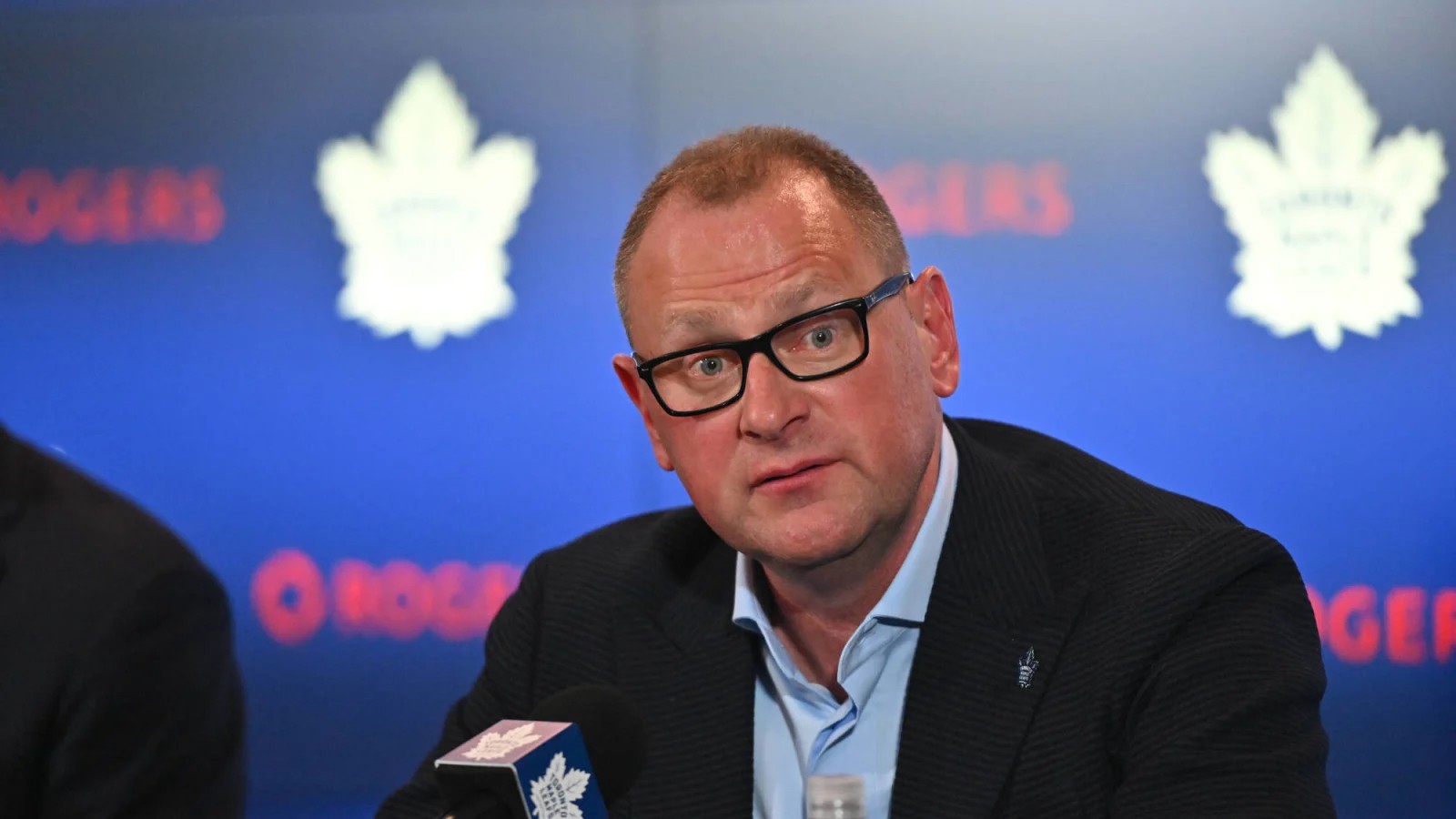
Which brings us to Brad Treliving, the man responsible for keeping Craig Berube behind the bench all season despite all of the warning signs.
The worst part: Treliving knew those warning signs were there early in the season. In a November media availability following the Leafs’ slow start, Treliving stood in front of the media and said the following words:
“There are nights when you just score more than the opponent, but you haven’t played well. Far too often, even in games that we have won, we haven’t won the game. Sometimes, we’ve scored more goals.”
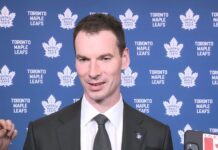
Ultimately, Treliving failed to act in any meaningful way. This entire season has gone off the rails for a multitude of reasons, but as it’s all transpired, Treliving has been paralyzed. After making a few waiver claims at the start of the season (Cayden Primeau and Sammy Blais), Treliving didn’t do anything for five months other than claim Troy Stecher and fire assistant coach Marc Savard. In that same time period, he came out multiple times in full support of Craig Berube, and while we can understand a GM not slagging his coach publicly, Treliving knew — and publicly admitted — early on that nothing about the team’s process looked good. He didn’t step in.
After the Leafs lost to the Panthers in Game 7, Treliving noted the following in his year-end availability:
“Really, if you look back to last summer, we made a change and brought in Craig (Berube). Really, the thought process behind that is that I felt there was a style of play that we needed to get to. It is a style of play that I feel gives you the best chance to have success. We’re seeing it in the playoffs. We see it prevalent in our division.
It is a direct style. You have to become a forechecking team. You have to limit risk; there is always risk in this game, but you are trying to reduce risk. I think that gives you the best chance to win at the most important time.”
This is a style Treliving has been chasing since he arrived in Toronto, ever since the infamous “snot” line to start his managerial tenure. He added Tyler Bertuzzi, Max Domi, and Ryan Reaves, followed by deadline acquisitions of Joel Edmundson and Ilya Lyubushkin on defense.
Then came the hiring of Berube, and in fairness, a much better offseason. OEL has been of great value thus far, and Chris Tanev was excellent in his first season. Anthony Stolarz was a real hit as well, while Max Pacioretty turned out to be a great veteran addition. Even Steven Lorentz was a solid depth move.
The team performed well in 2024-25, and Treliving decided to push all his chips in at the deadline, which is where things started to fall apart for him. The Scott Laughton trade was generally in line with the deadline trades we see for centers with term. We just saw Nic Roy net a first-round pick on the same deal/term as Laughton, and the Roy trade didn’t include retention. Michael McCarron netted a second-round pick for Nashville. The price paid was not out of the ordinary, but when Treliving paid up, surely he wasn’t envisioning Laughton stapled to Lorentz in a purely defensive role on the fourth line. Laughton played 63 games as a Leaf and produced 16 points, which would’ve easily been the worst season of his career.
Treliving then paid a huge price for Brandon Carlo, and it hasn’t worked out at all. Yes, there are other Treliving moves that aren’t pretty — Max Domi receiving a four-year contract extension stands out — but every GM is guilty of a few of those. The Carlo trade, including a lightly protected first, is hard to shake as the season has unravelled, and it only looks worse as Treliving did nothing about said season unravelling.
If the inaction wasn’t enough, the recent trade deadline really sealed the deal. In a clear sell situation, all Treliving could manage was a total of three trades. There was talk approaching the deadline about a Boston-like retool, but he didn’t come even close to one. Boston acquired three players who are top-nine forwards for them this season. The Leafs acquired zero actual players. Additionally, in those trades, he didn’t get nearly enough value back.
The Roy trade was fine in a nutshell, but the team has zero right-handed centers moving forward. Roy had term, and the UFA market has no options either, unless you really like and rate… Kevin Stenlund (who I actually like, for the record, but he’s limited). Fetching a first-round pick makes it fine enough, but a potentially very late first-round pick in ’27 for a proper center when the team is apparently hoping to rebound next season will not help them any time soon.
Treliving then traded Bobby McMann and Laughton for pennies on the dollar. McMann, fourth among all pending UFAs in goals and one of the fastest players in the league, netted the Leafs a second and a fourth. The condition on the second-rounder is that it’s the lower of the two draft picks available, and the pick is in 2027. Kiefer Sherwood netted Vancouver two seconds, which should have been the bar for McMann, who has produced more than Sherwood this season and outscored him last season.
At the final hour, Treliving moved Scott Laughton for a conditional third-rounder that could move up to a second if LA makes the playoffs. If the pick does not move up, it would mean the Rangers will have received more for Sam Carrick — a player who had never scored more than eight goals or 20 points in his entire career at the time of the trade — than the Leafs did for Laughton, as Carrick returned a third and a sixth.
Treliving didn’t manage to trade any of the Leafs’ seven defensemen already under contract next season. He didn’t trade away any forward players who aren’t good fits moving forward, and he didn’t add a single prospect. The trade returns were underwhelming, and there was undoubtedly a cascading effect stemming from Treliving’s mistake in keeping Berube while the overall team and most of its individual players struggled: the sell-low reality on some of his trade assets applied not only to Laughton but also to the pieces he may have liked to move but couldn’t.
Treliving also mismanaged Easton Cowan’s game count, as he played too many games before the Olympics to be eligible for the Marlies, but he was a healthy scratch the week before and after the Olympics. It’s one thing if Berube doesn’t want to play him, but it’s the responsibility of the manager to look out for young players and make proper business decisions where appropriate. He fell short.
Now, the season is in complete disarray, and we’re still watching Philippe Myers and Simon Benoit dress night after night. They haven’t called up a single defenseman. Calle Jarnkrok is a nightly roster lock, and Jacob Quillan has little chance of showing much of anything with his linemates and deployment situation.
The management group has fallen short across the board, from their inability to act while the season was still within reach, to their inability to sell effectively when it was out of reach, to their inability to simply promote and evaluate youth while the team is clearly out of the mix.
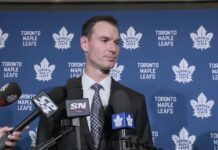
As Treliving did the media rounds after the deadline, while I have been critical of the media at times for lobbing too many softballs, full credit to Nick Kypreos for straight-up asking the GM if he actually has a plan and whether he is the right man to run the team moving forward. It’s a hard question to ask, but it’s a fair and necessary one. The answer, though, was far less inspiring, as Treliving replied, “We definitely will have a plan. There is a plan we will have put together.” How you follow up the trade deadline by announcing that a plan will be put together is beyond me.
Continuity in an organization is generally ideal, but it’s hard to shake the feeling that this entire Leafs season has been mishandled top to bottom. Some may suggest that installing a President of Hockey Operations above Treliving will help, but practically nothing has been handled well from a managerial standpoint this season. That’s very difficult to shake.
At the same time, Elliotte Friedman has reported on multiple occasions that Matthew Knies’ name is in play and has been discussed with other teams, even though the Leafs ostensibly don’t yet have a plan in place. Geno Reda asked Treliving about the plan at the recent GM meetings, and the reply once again was, “We look forward to letting everyone know what our plans are as we get closer to the end of the season.”
Treliving has been here three years now and hasn’t executed a single trade we can point to as a slam-dunk win. That doesn’t mean every trade has been bad — that wouldn’t be true — but there isn’t even one that is a clear, definitive win. Whether you think the Leafs should retool, tear it to the studs, or somewhere in between, a common denominator between the three is that the team needs a GM in place who can actually win trades. Every single path requires one. Treliving certainly hasn’t done anything to give us the confidence that he can effectively trade the team’s best U25 player for great value. If he can’t be trusted to do that, it really tells us everything we need to know.
Keith Pelley
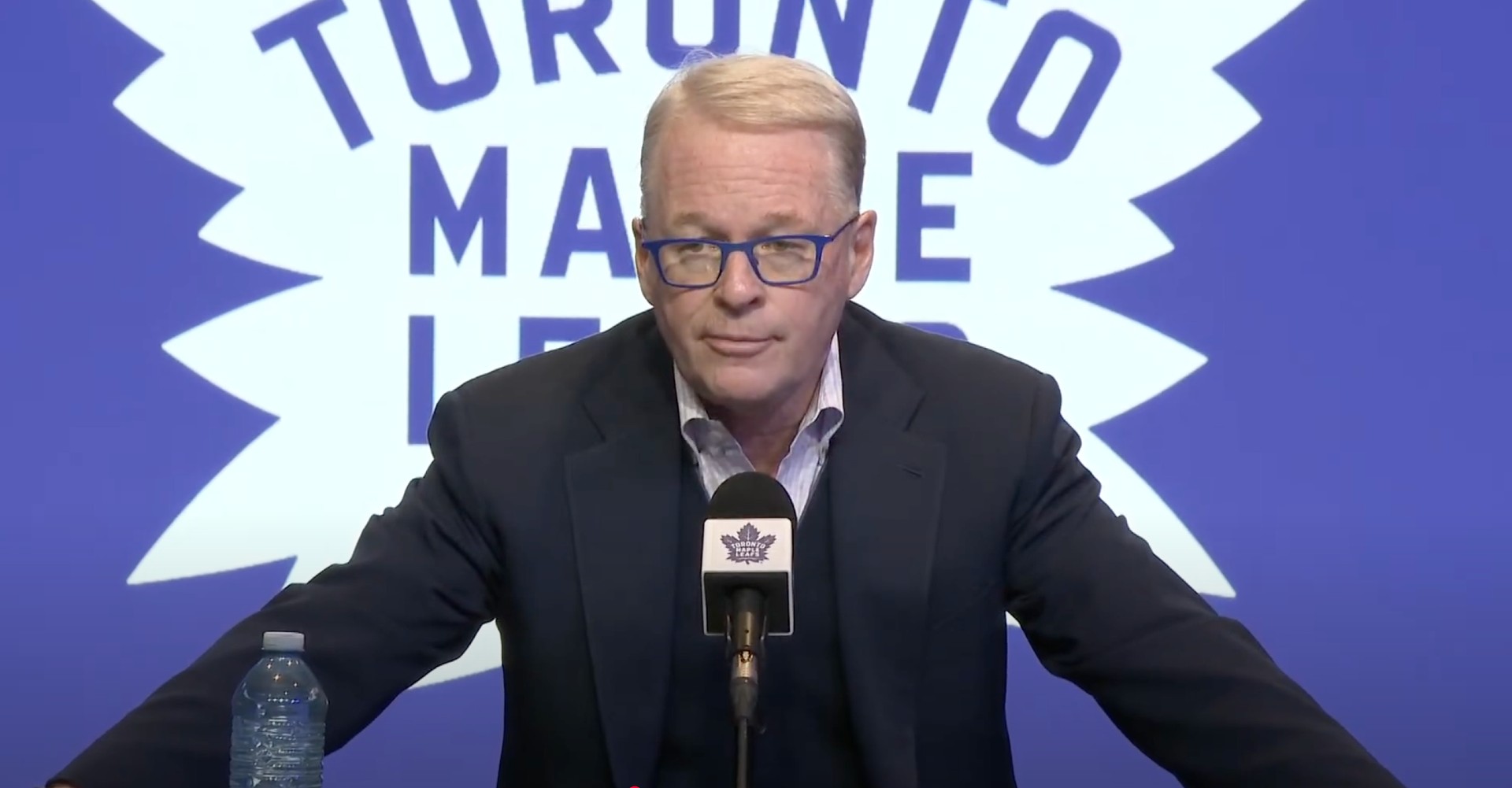
I would be remiss not to at least mention the MLSE President and CEO, Keith Pelley.
As anyone who has worked in even a mid-sized organization knows, when someone new takes charge and immediately starts cutting positions in the name of streamlining/saving money, it usually means the loss of expertise and experience will be felt down the road.
Nobody should really expect Pelley to monitor Cowan’s game count to ensure he’s eligible for AHL games during the Olympics, but a proper hockey president should be overseeing the development of the team’s current top prospect and ensuring it’s handled properly. The president should also help formulate a plan that they can speak to following a critical trade deadline. In general, the president should uphold some accountability for everyone beneath them in the organization.
After dismissing Brendan Shanahan last offseason, Pelley said the following on the 100% Hockey Podcast:
“Hockey is not my entire life. It is a component of my life, and I am a fan. I have been able to separate it and look at it strictly from a business perspective. As I said to Brad, the key to success for any team — or the difference between winning 5-4 or losing 5-4 — is the chemistry and culture of that specific team and the leadership that the team has. That is what I said to Brad. “I understand chemistry, I understand culture, and I understand the importance of it. I can help you with that. I certainly won’t help you decide who you are going to draft in the second round of the NHL draft this year.”
We won’t touch the culture and chemistry part, so all I’ll say is this: If this is the President, the organization better have one of the five best GMs and overall management groups in the league. Consensus on the Leafs’ current group likely wouldn’t place it in the top 20, if that.
Early in the season, Pelley talked about the team’s window of contention, and six months later, they are one of the worst teams in the league. Regardless of how much Pelley may or may not know about hockey, he can’t possibly think anything other than the obvious here.
All of this circles back to a simple fact of the matter that most readers are fully aware of: The Maple Leafs need to clean house. There’s no real ifs, ands, or buts about it, after the way the season has played out.
The team and its individual players have all generally punched below their weight. The head coach couldn’t solve any problems. The GM sat on his hands, and the President either didn’t know enough to step in or trusted the hockey people below him to make the right calls. It turned into a slow-motion trainwreck.
The Leafs’ 2025-26 season will end on April 15. The draft lottery is on May 5. There should be a new GM in place by then, and a new head coach by the June 26 draft. In a season full of uncertainty, these are decisions we should all be clear about as we move forward.