


















The Maple Leafs’ UFA offseason additions up front made their priorities at the position pretty clear.
After finishing as one of the league’s worst defensive teams in 2025-26 while deploying Auston Matthews like he’s Jordan Staal, the Leafs added Colton Sissons, Teddy Blueger, and Brandon Duhaime to their bottom six—a trio of veteran forwards who understand their roles, can check, and have penalty-killing experience. Duhaime adds a slightly different dimension to the group with his combination of speed, physicality, agitation, and willingness to drop the gloves.
Duhaime arrives in Toronto on a three-year, $7.8 million contract ($2.6M AAV) after spending the previous two seasons in Washington. The player fills an identifiable need, but the commitment is at least somewhat debatable. Before free agency, AFP Analytics projected Duhaime for two years at $1.87 million annually. Prior to July 1, Anthony Petrielli identified him as a target of interest but preferred a one-year, prove-it contract. The Leafs ultimately guaranteed three years while exceeding the projection by over $700,000 annually.
That is partly the price of conducting business on the open market under a rapidly rising salary cap. At the same time, Duhaime is 29, has shown he brings limited offense, and he is coming off a season in which his production and role declined.
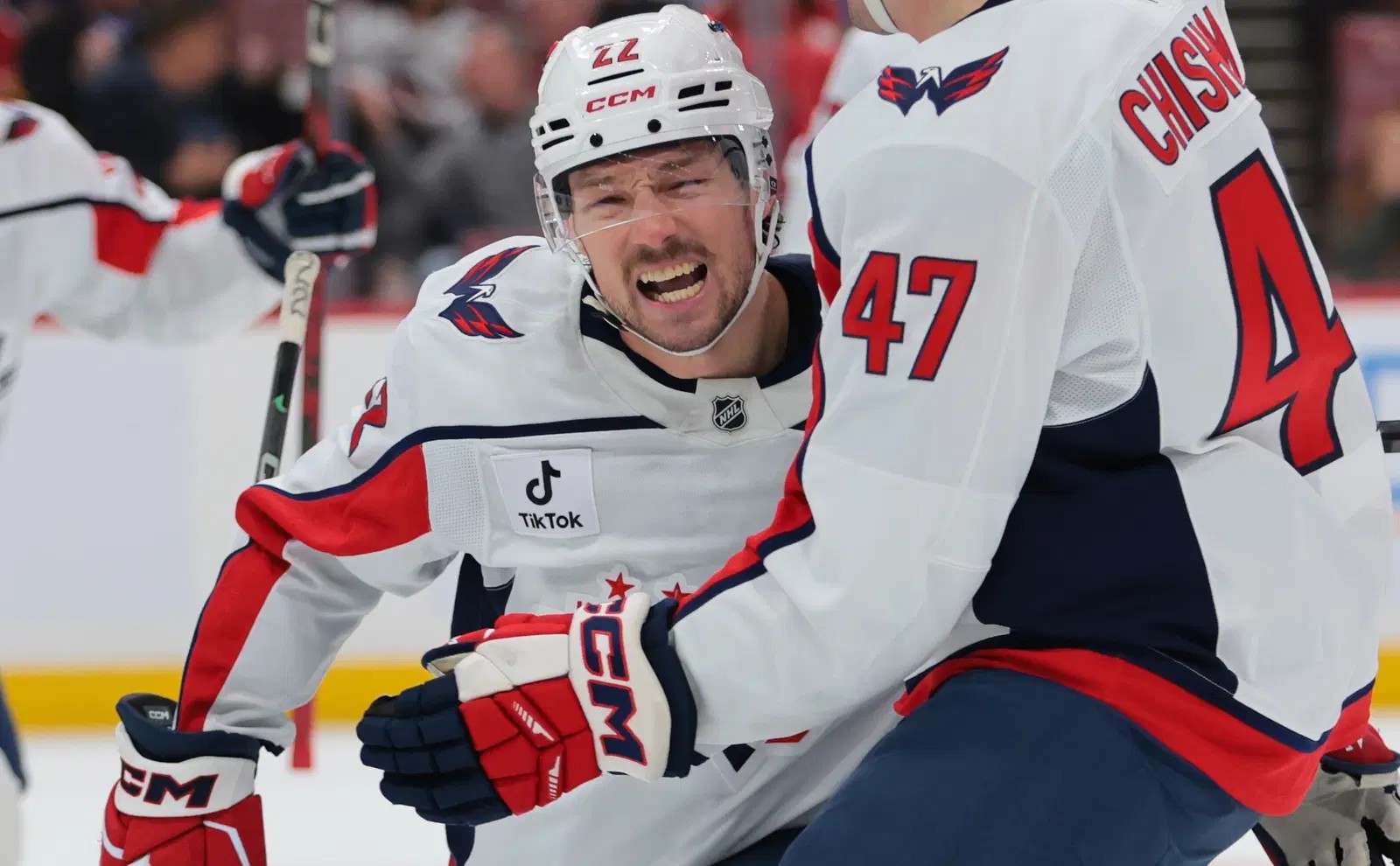
The first season in Washington (2024-25) represented the best-case version of Duhaime, who played all 82 games, scored a career-high nine goals and 21 points, averaged 13:21 per game for a Presidents’ Trophy-winning team, and logged 2:15 per night on the Capitals’ top penalty-killing forward duo alongside Nic Dowd. At five-on-five, he primarily played on the left side of Dowd, often with Taylor Raddysh on the opposite wing. Officially, it was Washington’s fourth line, but functionally, it handled work more typical of a dedicated shutdown line.
Dowd’s unit regularly faced strong competition, killed penalties, and absorbed a steady diet of defensive-zone starts, allowing Washington to tilt more favourable deployment toward Alex Ovechkin and its scoring lines. The line ate defensive-zone starts for breakfast; Duhaime started only 15.5% of his non-neutral-zone faceoffs in the offensive zone.
Spencer Carbery described the Dowd line’s assignments as “hard, heavy, 200-foot defensive minutes.” Duhaime was one of the primary wingers sharing those minutes, bringing the speed and forechecking pressure required to help the line check and move north.
The results were respectable in context: The Capitals were right around break-even with Duhaime and Dowd on the ice at five-on-five despite the heavily defensive deployment (26-27). Duhaime finished the season with 165 hits, blocked 65 shots, and played a sizable role on a penalty kill that finished top five in the NHL.
The offensive contribution was a welcome bonus, even if it was never likely to become the new baseline. Duhaime’s nine goals came on 83 shots and a 10.8% shooting percentage. He then scored three times in 10 playoff games, including two third-period goals in Washington’s pivotal Game 4 victory over Montreal.
The second Washington season was less impressive. Duhaime again dressed for all 82 games—durability/availability carries value in its own right—but his production fell to four goals and nine points. His average ice time dropped by over two minutes, from 13:21 to 11:04, while his penalty-killing usage was cut almost exactly in half, from 2:15 to 1:07 per game, as Connor McMichael’s shorthanded role grew significantly and Anthony Beauvilier joined the rotation.
The underlying results also dipped amid Washington’s disappointing season. The Capitals controlled 45.8% of the five-on-five shot attempts and 48.9% of the expected goals with Duhaime on the ice, while opponents outscored Washington 23-18 at five-on-five. His shooting percentage fell to 6.3%, but the decline in goals wasn’t solely a matter of finishing luck; his shot total also dropped from 83 to 64.
Duhaime remained highly physical, recording 159 hits and eight fighting majors. He also scored a shorthanded goal and remained an option on the penalty kill, even if the Capitals didn’t use him as heavily there.
The three-year term is again worth noting. Duhaime’s effectiveness is largely rooted in speed, physical engagement, and competitive edge. Players of this profile quickly lose effectiveness if they lose half a step or some of the hunger that made them useful in the first place. Hopefully, the security of a three-year agreement doesn’t take any of the edge away here.
Duhaime’s 2026-27 Outlook
The blueprint for extracting good value from Duhaime already exists from his 2024-25 season in Washington: place him alongside a responsible checking center, give the line a strong dose of defensive-zone assignments, and use his speed and physicality to apply pressure and push play up ice.
For Washington, the center was Dowd, a capable defensive specialist down the middle. Whether it’s Sissons or Blueger in Toronto, both have extensive experience playing down the lineup, taking defensive assignments, and killing penalties.
Duhaime should complement that type of line just fine. His speed is a particularly useful ingredient in a bottom six that could otherwise become a little slow depending on the combinations. He can be a complementary winger on a checking line — not its primary driver, clearly — and provide physicality, energy, and speed on the flank.
After Washington acquired Anthony Beauvillier at the 2025 deadline, Carbery started the newcomer beside Dowd and Duhaime and spoke of Duhaime’s reliability there:
“Dowd and Dewey are really good players to play with to get him integrated into our group. They talk a ton, not only on the ice but off the ice, on the bench.”
Duhaime should receive an opportunity on the Leafs’ penalty kill as well. His usage declined last season, but he has a substantial track record there, including over two minutes per game shorthanded in 2024-25. His speed allows him to close quickly on puck carriers, while the courage and commitment required to block shots, contest the wall, and pressure the point aren’t in doubt.
Duhaime could also help address a more intangible need within the Leafs’ culture: He is a willing fighter with a history of stepping in for teammates. A few examples spring to mind; during his Minnesota tenure, he immediately challenged Logan O’Connor after O’Connor hit Dmitry Kulikov from behind. Last season in Washington, Duhaime fought Brandon Tanev after Tanev boarded Matt Roy. After too many recent examples of opponents taking liberties with Leafs players without an adequate immediate response, Duhaime should (hopefully) take note and be fully prepared to act.
Arguably, the Leafs also need more players who can raise the temperature of games.
Over the last two seasons, Duhaime drew 48 penalties in approximately 2,000 minutes. His rate of 1.44 penalties drawn per 60 all-situations minutes ranked 20th among NHL players with at least 1,000 minutes played (it was 1.6 per 60 at five-on-five, which ranks 18th). That is noteworthy for a Leafs team that finished dead last in the NHL with only 197 power-play opportunities last season.
We can spend all day speculating about the reasons for the Leafs’ lack of power plays. They didn’t possess the puck nearly enough last season, naturally limiting their opportunities to put defenders in bad spots. There were many nights when the officiating was particularly dubious and one-sided. The Leafs also haven’t generally been a team that initiates much physically or agitates opponents.
The Michael Bunting era is worth reflecting on in this one sense: Across the 2021-22 and 2022-23 seasons, the Leafs received 477 power-play opportunities, tied for 21st in the NHL. That’s still firmly in the bottom half, but it was considerably more respectable than dead last or close to it. Bunting, a league leader in the category, drew 88 penalties alone during those two seasons, more than twice the total of Auston Matthews, who ranked second on the team with 41. Bunting lost the benefit of the doubt from the officials, and there were certainly nights when his act worked against him, but his ability to initiate, agitate, and provoke retaliation carried real value at times.
Notably, Duhaime will take his fair share of penalties, too — he was assessed 33 minor penalties over the last two seasons — but there is value in someone who can turn up the temperature a little, bring some gamesmanship, and generally piss people off. Unlike Bunting, Duhaime is also a fully willing and capable fighter.
Duhaime’s career highs remain nine goals and 21 points, and last season’s four goals and nine points are an obvious reminder of the limitations of the player. He does not carry the puck particularly skillfully, drive much offense for his linemates, or offer realistic upside higher in the lineup. But the Leafs don’t need him to try to become something he isn’t.
If Duhaime can chip in a little offense, help form a line that absorbs defensive-zone starts without getting filled in, add speed and jam to the bottom six, contribute on the penalty kill, answer the bell when necessary, and initiate enough physicality to drag opponents and teammates into the fight, he’ll earn his paycheque.