























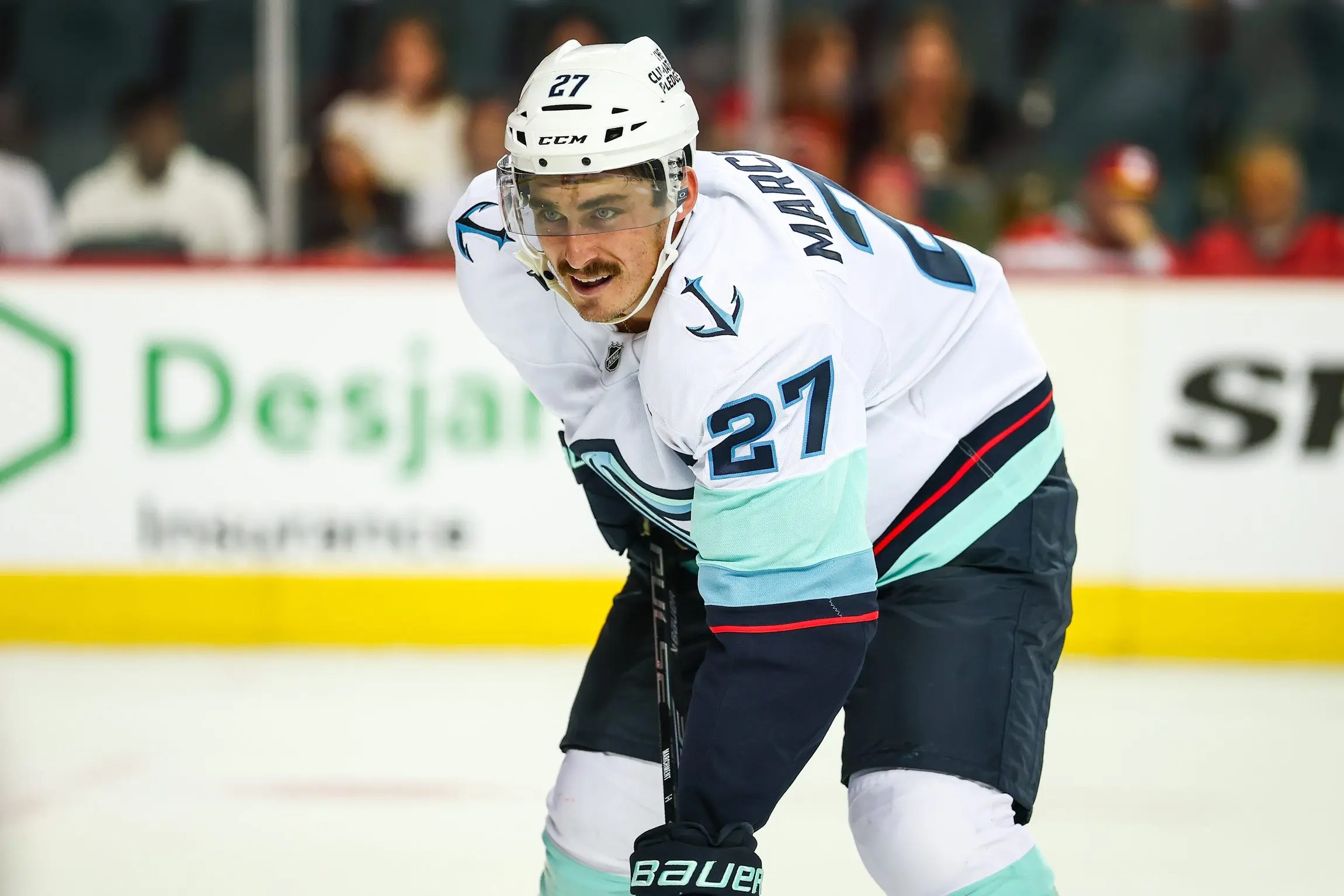
The Maple Leafs enter this offseason in a similar position to where they were a year ago. They have plenty of cap space to work with, but there is still a clear need to add impact players if they’re going to start looking like a legitimate contender.
The biggest difference is that Toronto has already landed one of the premier free agents available in Darren Raddysh. Combined with the arrival of Gavin McKenna, there is clearly more to be excited about than there was at this time last year. McKenna alone projects to provide an offensive boost, while replacing Brandon Carlo and Simon Benoit with Raddysh and Emil Andrae should dramatically improve the club’s puck movement and offensive punch from the back end.
That doesn’t mean the work is finished. Despite the additions, the forward group still has clear holes, and heading into the season with their current goaltending options would be incredibly risky. The Leafs missed out on Brad Marchand in free agency last summer and ultimately settled for complementary pieces like Dakota Joshua and Matias Maccelli, who didn’t fundamentally change the team’s outlook. While they will likely make some sort of splash via trade, this is a team without its next two first-round picks, making free agency an important avenue to add another difference-maker.
The organization’s greatest advantage this summer is its financial flexibility. Rather than using that cap space to hand out long-term contracts that could become burdensome, Toronto should look to weaponize it by offering higher average annual values on shorter deals. That approach creates opportunities to attract productive veterans chasing one more payday or players looking to rebuild their value before signing a larger contract elsewhere. Instead of overpaying on term, the Leafs should be willing to overpay on AAV.
Where Toronto Stands
With the defense corps largely set, barring another significant trade, Toronto’s primary focus in free agency should be up front.
As things currently stand, Jake McCabe, Chris Tanev, Oliver Ekman-Larsson, Morgan Rielly, Emil Andrae, and Darren Raddysh project as the team’s six regular defensemen. Prospect Ben Danford also appears to be knocking on the door of the NHL and should be capable of stepping into the lineup when injuries inevitably arise.
The biggest domino still hanging over the roster is Morgan Rielly. If the organization ultimately decides to move him, doing so sooner rather than later would give management enough time to pivot and use the newly available cap space on a replacement. If they keep both Rielly and Oliver Ekman-Larsson, we may not see any major additions on the blue line, as they already have six regulars.
The bigger challenge lies with the forward group.
Center is easily the biggest area of need following the departures of Scott Laughton and Nicolas Roy. Matthews and Tavares remain strong offensive centers, but neither is best utilized in a shutdown role. Toronto needs to add two players down the middle, and at least one must be a legitimate checking-line center capable of handling difficult defensive assignments.
The wing also needs work, particularly from a defensive standpoint. McKenna is an elite talent but will inevitably experience rookie growing pains, especially in his own zone. Nylander remains Toronto’s best winger but has never been known for his defensive game. Nick Robertson and Easton Cowan are both smaller forwards with questions surrounding their defensive impact, and if he ends up playing next season, Max Domi is bound to struggle in his own zone.
The Leafs need more forwards who can forecheck aggressively, recover loose pucks, defend responsibly, and complement their offensive stars rather than simply adding more skill. This team is not looking for players who provide most of their value on the power play.
Finally, Toronto could use additional right-shot wingers, as William Nylander is currently the only one on the roster.
Free Agent Targets
Boone Jenner
The Ontario native is the best center on the open market, and his arrival would solve the Leafs‘ biggest roster hole. In an ideal world, John Chayka would address this need with a shrewd trade for someone younger and better defensively, but opposing teams aren’t exactly lining up to give up top-nine centers. While the 33-year-old Jenner isn’t quite the same type of difference-maker Nazem Kadri and Ryan O’Reilly were during their tenures in Toronto, he would allow the Leafs to ice a far more dangerous third line than they have in recent years.
Jenner would bring size, physicality, and leadership to a forward group that could use more of all three. Over the past two seasons, 371 forwards have played at least 1,000 five-on-five minutes, and Jenner ranks 42nd in primary points per minute. For context, that puts him right around Auston Matthews. His power-play production has been minimal during that span, but the Leafs don’t have room for him on their top unit anyway.
Jenner isn’t perfect. Based on his track record, he’s likely to miss at least 15 games per season. He’s also played a fair bit of wing instead of remaining a staple down the middle. However, acquiring a center of his calibre via trade would come at a high cost, and the other free-agent centers simply don’t offer the same offensive upside.
Adding Jenner would allow the Leafs to spread their offensive talent across three dangerous lines rather than having a clear top six and bottom six. If they sign him, they can then target a fourth-line center who can be buried with defensive-zone starts.
Oliver Bjorkstrand
The Leafs could use a right-shot winger, and Bjorkstrand would fit in nicely given his reliable two-way game. He’s a bounce-back candidate who should be looking to rebuild his value, and if you’re trying to earn a bigger contract in a future offseason, there are few better places to do it than Toronto.
There’s simply more attention on Leafs games than the average NHL team, and we’ve watched players like Michael Bunting, Ilya Mikheyev, Pierre Engvall, Justin Holl, Ilya Lyubushkin, and Luke Schenn all turn productive stints in Toronto into larger contracts elsewhere.
Bjorkstrand could start the season alongside either Matthews or Tavares, and there are plenty of talented left wingers for him to play with.
If I were his agent, my first call would be to Toronto.
He settled into more of a checking-line role in Tampa Bay, but he’s only two seasons removed from recording 59 points with Seattle. Bjorkstrand’s five-on-five production per minute remains quite impressive over the past two years, so I do think he can move the needle in terms of making this team look more like a legitimate contender.
My guess is that he won’t receive the kind of long-term contract that pays him like a 50-point winger. If that’s the case, the Leafs have more than enough cap space to entice him with a one-year “prove it” deal. Fans aren’t going to throw a parade if he signs in Toronto, but the Leafs should be involved with just about every quality player willing to consider a one-year contract.
Mason Marchment
Mason Marchment may ultimately price himself out of Toronto’s range after producing 32 points in just 39 games, but the fit is strong.
Marchment creates value through forechecking, puck retrieval, physical play, and forcing turnovers. He’s not the fastest player in the league, but he would pair well with Toronto’s skilled forwards. He’s also an example of toughness done correctly, as he can stand up for teammates while still playing meaningful minutes.
His left-handed shot isn’t ideal, and adding more speed would probably be preferable, but his ability to consistently win pucks back would make life much easier for the Leafs’ offensive stars.
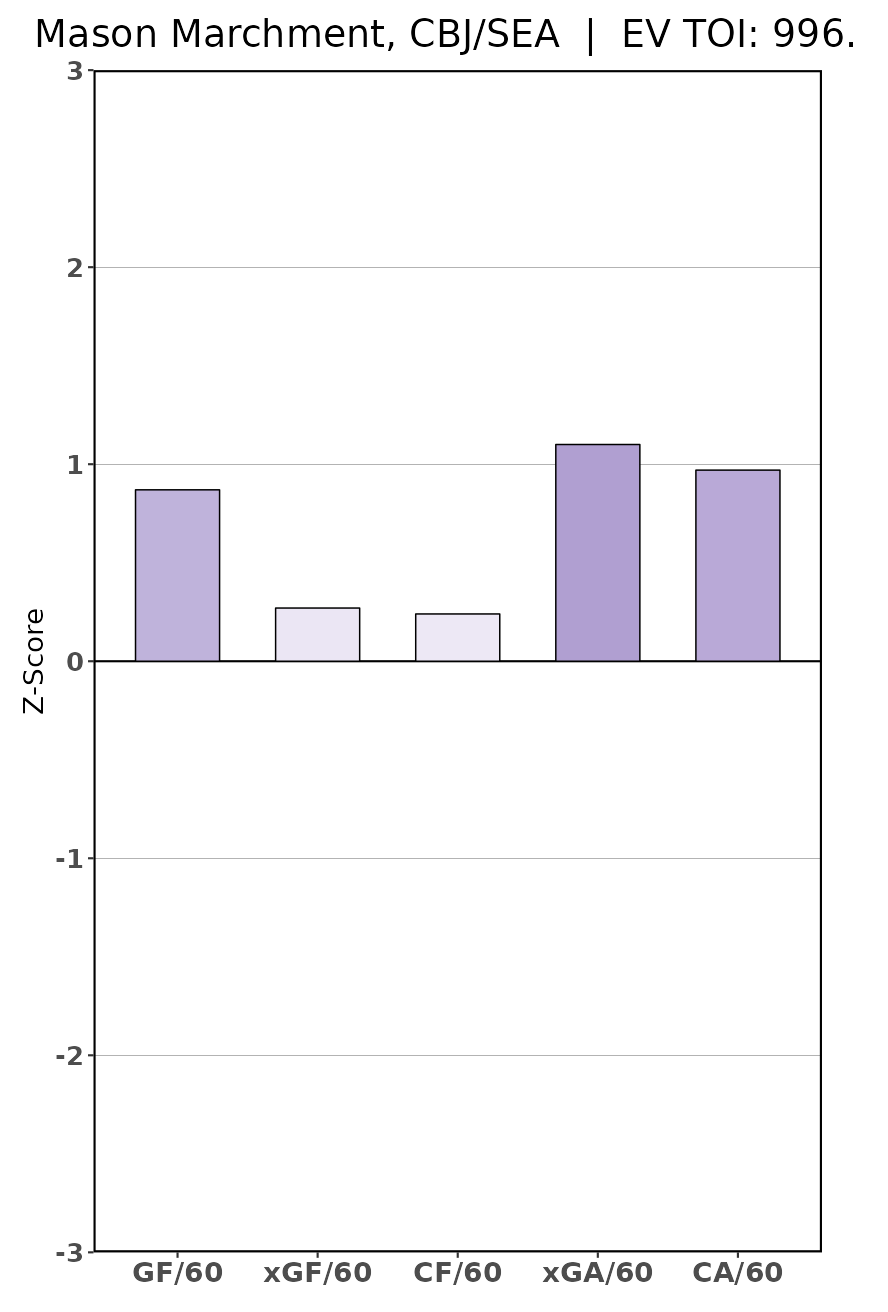
Marchment ranks 34th in five-on-five primary points per minute among the 371 forwards with at least 1,000 minutes over the past two seasons. He could potentially play on Matthews’ left wing, allowing both Knies and McKenna to drive their own lines.
Anders Lee
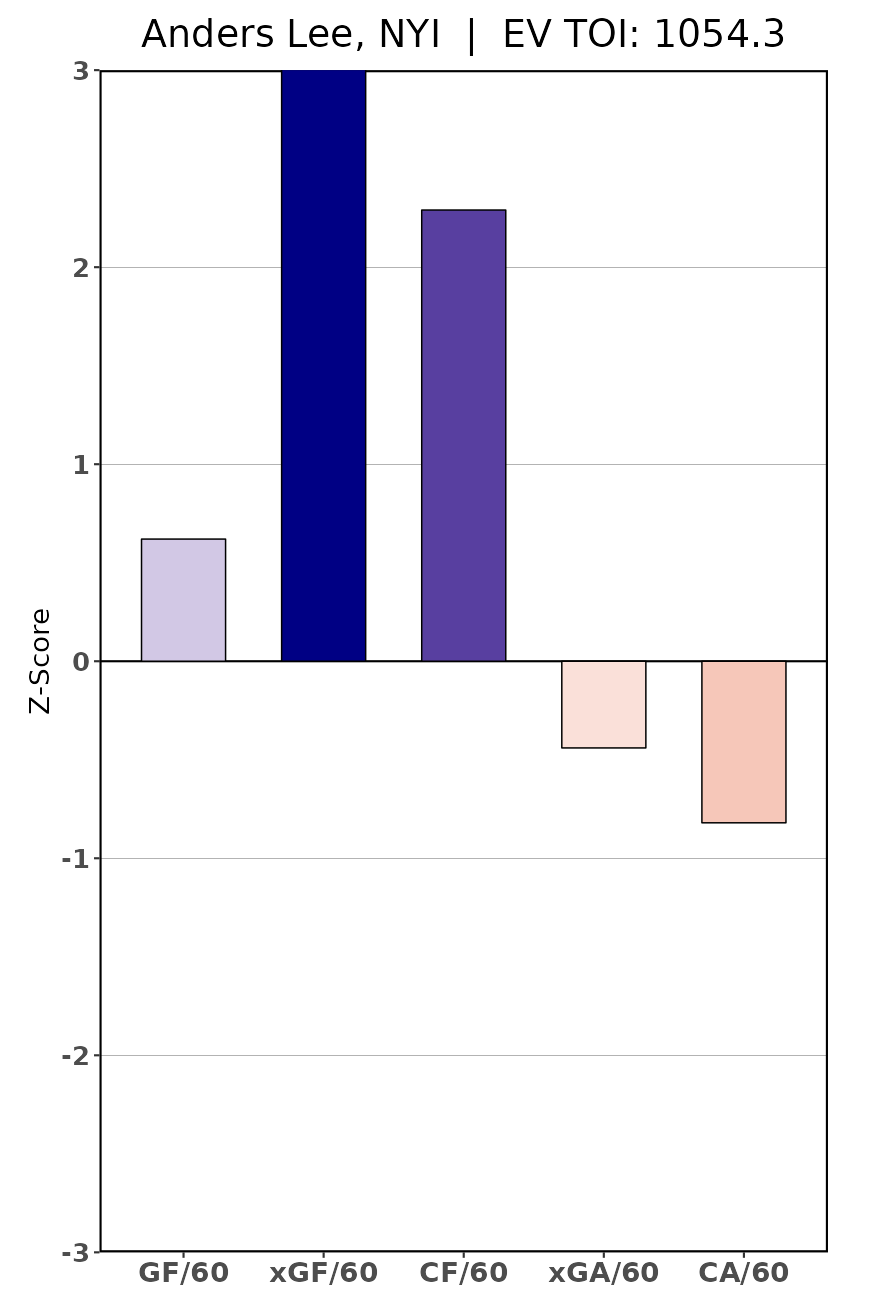
At first glance, Anders Lee may not appear to be the cleanest fit because he plays the left side rather than the right. However, his RAPM results are outstanding, and his combination of size, net-front presence, and puck retrieval would complement this roster well.
I expect the Leafs to add another player or two who isn’t afraid to fight, and Lee has proven he’s willing to drop the gloves with players like Brady Tkachuk. Similar to Marchment, he would allow John Chayka to add toughness throughout the lineup rather than another Ryan Reaves-type player who gets caved in night after night.
At nearly 36 years old, Lee perfectly fits Toronto’s broader offseason philosophy. A short, expensive contract is far more appealing than a long-term commitment. His five-on-five production remains quite strong, and acquiring this type of player via trade would likely be expensive.
Jack Roslovic
In an ideal world, I would prefer someone who is better defensively, but Roslovic is coming off back-to-back 20-goal seasons and shoots right. He’s settled for one-year contracts in each of the past two offseasons, so even though he’s only 29, I’m not convinced a team will commit to him long term.
Toronto could offer him a healthy raise over the $1.5 million he earned last season, and if it’s only a one-year commitment, I’d much rather acquire a player like this through free agency than surrender assets in a trade.
He also played with Auston Matthews on the U.S. National Under-18 Team, and like Oliver Bjorkstrand, he should be intrigued by Toronto’s combination of elite centers and talented left-wing options.
Fourth-Line Option
Noel Acciari
Noel Acciari isn’t a flashy addition, but he’s a fan favourite who would fill a couple of needs without requiring a significant financial commitment.
Toronto lacks forwards who can consistently start shifts in the defensive zone, kill penalties, throw hits, and embrace difficult minutes. I don’t expect him to score 13 goals again next season, but it’s his defensive impact that would drive this signing.
Acciari would give the Leafs a right-shot winger who can also take faceoffs on his strong side, and pairing him with Steven Lorentz would give Jim Hiller a line he could comfortably bury in defensive-zone starts.
There are plenty of forwards in this lineup who would benefit from more sheltered usage. I liked Acciari during his first stint in Toronto, and I don’t expect him to require a three-year commitment this time around.
Note: I initially listed Beck Malenstyn in this section as well, but he re-signed in Buffalo on a pretty wild contract.
Older Veterans Worth Calling About
Claude Giroux, Mats Zuccarello, and Viktor Arvidsson
Claude Giroux and Mats Zuccarello fall into a category very similar to Anders Lee’s.
Neither player represents a long-term investment, but both continue to produce at an impressive level despite their age. If Toronto is going to spend aggressively, these are exactly the types of players worth targeting on short-term deals.
Giroux would be the cleaner fit if he’s willing to sign in Toronto, as he shoots right and grades out better by RAPM. Zuccarello shoots left, but he has spent much of his career playing the right side, so that isn’t much of a concern. While he doesn’t bring Lee’s size and physicality, he remains one of the league’s smartest playmakers and hovered around a point-per-game pace last season.
Either player could slot alongside Matthew Knies and Auston Matthews and be trusted against opposing top lines. That would allow William Nylander to drive his own line while giving younger players like Gavin McKenna and Easton Cowan more favourable matchups.
I’m not sure either player represents Toronto’s Plan A, but the Leafs have a lot to offer in terms of opportunity, competitive expectations, and cap space.
Arvidsson is the one player in this group who may require a multi-year term, but I would at least make the pitch for a one-year deal with a high AAV. He recorded 54 points in 69 games last season, so if you can add that level of production for nothing more than cap space, I’m interested. My hesitation is committing to multiple years, given his age and how things went in Edmonton the year before.