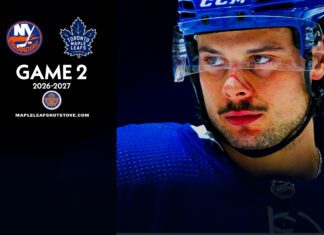








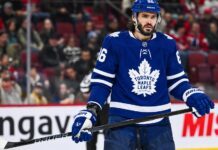




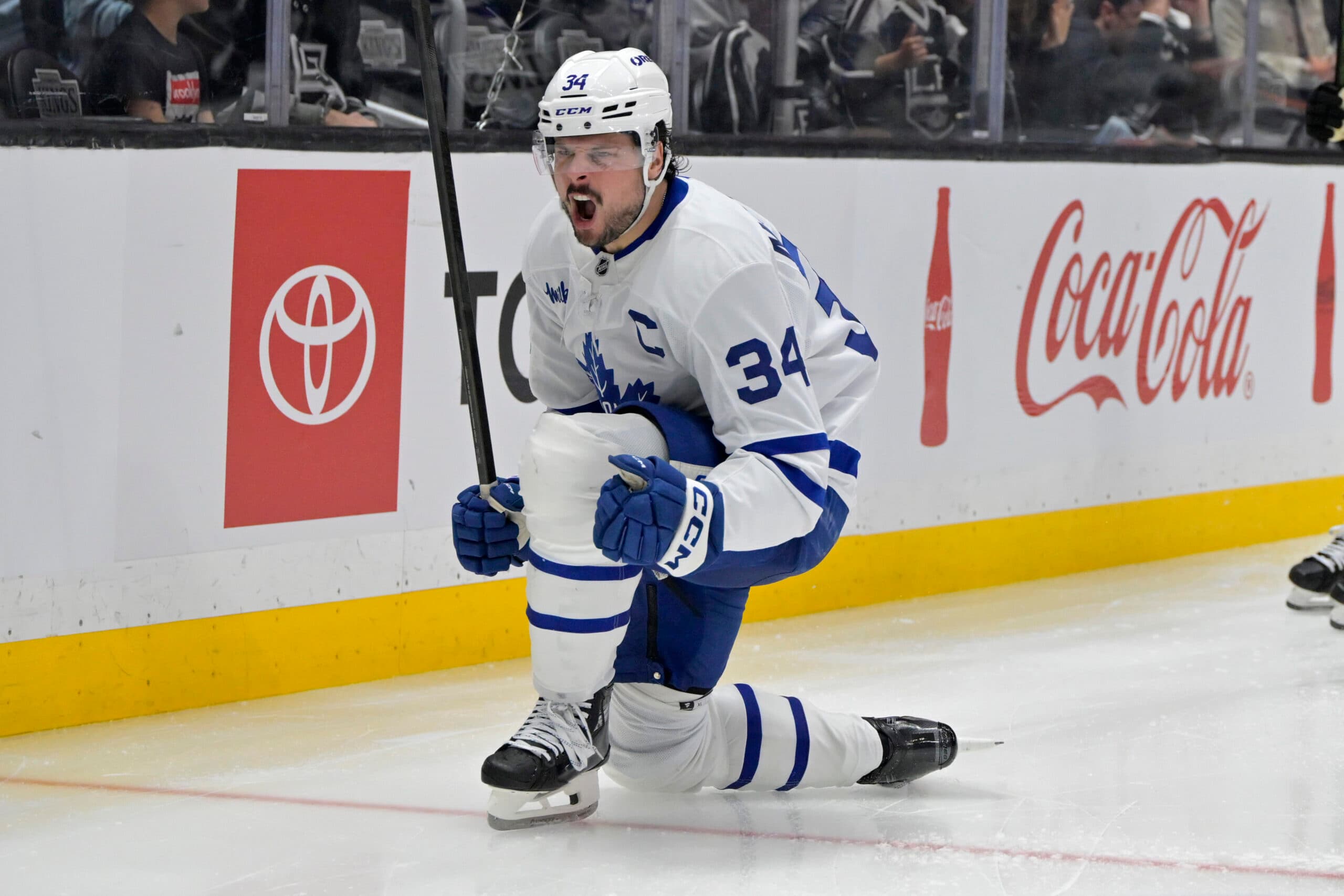
Dr. Sean Robek joined First Up to discuss his work with Maple Leafs captain Auston Matthews, Matthews’ offseason recovery from his knee injury, and the level of preparation and commitment from today’s elite NHL players.
Take us through your relationship with Auston and how long you have been working together.
Robek: Yeah, I met Auston about four years ago. It was kind of an interesting turn of events. I met Clayton Keller, and as a result of my relationship with Clayton, I got to know Auston and Judd. It spiraled from there about four years ago.
We have been working on a series of nothing huge, but biomechanical issues to make sure Auston can perform at his best.
What can you tell us about how Matthews’ summer is going and how the rehab is going? Is he feeling good heading into the season?
Robek: That’s a great question, and it is probably better answered by Auston, but for me, with treating him, let’s just say it’s an absolute privilege to have somebody like Auston in my office and be able to work with him.
The level of commitment he puts into taking care of himself in the offseason is remarkable and unique. He is certainly a one-percenter. Working with someone who has that diligence to get better and perform at his best… It is a privilege to be on his team.
In regard to what’s going on with his body, my job with Auston is to be his manual therapist. I specialize in certain areas of the body, specifically the low back and neck. With Auston, low back was not the concern this year.
Obviously, we’re taking care of his knee, so I was part of the team addressing the soft-tissue structures associated with that injury, but also throughout the rest of the chain. As you know, when the knee gets hurt, other regions of the body are going to take some abuse as well.
It’s my job to clean up those tissues, make sure the joints are moving well, and teach him some intentional corrective exercises so we can make sure the joints are functioning optimally.
You’ve been working with Matthews for the last four years. How different is the work you’ve been doing this offseason — the knee notwithstanding — compared to previous offseasons? Has it been more extensive this summer than in years past?
Robek: I think this year has been more extensive, but also fun at the same point, if I can use the word “fun,” because of the team around him. There are a number of specialists who are all on the same page and trying to make sure Auston gets to 100% and can perform at his best.
These are legendary people in the industry, and there is no stone left unturned to make sure there is greatness in the 2026-27 season.
Working with him and being part of this team has been quite a unique process. It’s fun seeing Auston come in with energy, a smile, and optimism. He’s ready to go; he’s very energetic, and it’s going to be a fun season to watch.
How important is the recovery process and the preventative measures that go into chiropractic work for professional athletes in the modern day? The game is played at such a hard physical level. How important is it for players to continually maintain their bodies and treat it like a temple, essentially?
Robek: That’s a great question. When I get hired by athletes independently or act as their concierge provider and travel with them, my job isn’t so much injury correction. They’re not hiring me because they’re injured. They’re hiring me to make sure they stay well.
If they get injured outside of blunt-force trauma that nobody has control over, that kind of falls on my shoulders. It’s a bit my fault. I have to take that personally and work toward correcting that and making sure it doesn’t happen again.
My job is to keep them healthy, keep them on the ice, and keep them injury-free. If they’re injured, then I have to look at what my processes are.
What’s great about it is that the best of the best are hiring certain types of individuals to be on their team. One is a structural performance specialist or manual therapist. That would be me. The other people would be internal wellness professionals or functional medicine doctors to make sure their internal chemistry is optimized.
The best of the best of the best hire mental performance coaches. They work with these coaches throughout the weeks, season, and offseason to make sure they have the habits of excellence to be better than anybody else.
Those three pillars — structural, internal, and mental performance — are what make these guys great.
You mentioned Clayton Keller and Auston Matthews. You’ve been working with Connor McDavid and Leon Draisaitl a little bit as well. What can you tell us about those experiences?
Robek: When you get a call and somebody asks you to potentially work with Connor McDavid and Leon Draisaitl and be part of their team, it immediately elevates you. It says, “Oh boy, it’s go time. Let’s go to the next level.”
It makes me better. I’m always pushing to be the best. When you work with the best, there is no room for cushion and no room for error.
But what’s been fantastic is watching their behaviours, daily habits, and routines and seeing what it takes to be elite. There is not one minute that isn’t occupied by correction, wellness, rehabilitation, performance, rest, or recovery. It’s all dialed in minute by minute. There is no variation.
It’s quite a unique situation to be a part of and to witness. In all transparency, it just makes me better. It’s been an absolute privilege.
With Matthews, he suffered the major knee injury and didn’t play again for the Leafs after the infamous Radko Gudas incident. As far as reconditioning, it’s clearly not just about the knee getting healthy. Other things are affected by an injury like that. Can you take us through how an athlete builds back up after that type of injury?
Robek: For an injury like that, to perform at his level, with what he expects out of his body and the physical demands based on the stress he puts himself through, there are specialists who can put the perfect amount of demand and force on the tissues to stress them enough to get strong for a sport-specific activity.
That would not be my specialty. Thank God there is a gentleman by the name of Bill Knowles out of Philadelphia who is incredible at that.
Like I said at the beginning of the interview, when you have that team put together — me as the manual therapist, other strength coaches, and sport-specific specialists — and they all come together, that’s when you have a complete product.
In this consideration, we’re talking about a knee, but manual therapists, strength coaches, and performance specialists have to look at everything from the big toe all the way up to the neck.
Clearly, we want to focus on the site of the injury, which was the knee, but any good therapist is going to look throughout the entire body for any dysfunction.
That’s what we’re here for: to clear up dysfunction and then strengthen the body so it can perform at its best. That’s what we all do as a team.