















The NHL offseason has officially slowed to a crawl. The bulk of available players have found new homes, the insiders are on summer vacation, and the news cycle has slowed to the odd tidbit here or there.
We already analyzed each Maple Leafs signing one by one as they happened, but a few weeks later, I wanted to take some time to step back, look at the full picture, and piece it all together.
So much has happened that it’s almost difficult to know where to begin, but let’s start with this: a lot had to happen. When the GM search was ongoing, we noted how deep this overhaul needed to go:
“The successful candidate will need to rebuild this management group and then the coaching staff. Of course, he’ll need to address the actual NHL roster, too.
It’s easy to suggest everything is rotten within the organization after a bottom-five season, but in this case, there is a fair bit of truth to it… We’re easily looking at upwards of 70 employees under this umbrella. They can’t all go, but major reform is required.”
Whether the right people were brought in — both on and off the ice — obviously remains to be seen. But in a league that often moves at a glacial pace, some recognition is deserved for the sheer scale of the change that has taken place in Toronto.
One other thing we noted earlier this year, after The Athletic’s AI article and the seemingly endless stream of leaks coming from within the organization, was that the Leafs needed to address that internally. This isn’t to suggest that anyone/everyone who was let go was necessarily responsible for the leaks, but you can’t operate a functional organization while staff members are anonymously spouting off to the media. Major reform was required.
Every key person in management has been removed or replaced, save for Ryan Hardy, who is fresh off an AHL championship. The entire NHL coaching staff is new — there isn’t a single holdover from last season’s mess. The AHL coaching staff has also been revamped, and I’d argue they now have a head coach and maybe even an assistant coach with future NHL potential (building succession plans within an organization is always important).
That’s a lot of change before you even get to the roster, where there are roughly nine new players in the projected starting 19 (12 forwards, six defensemen, and one goalie), including Emil Andrae, whom I personally include in that group.
Top to bottom, the entire Leafs operation felt, for lack of a better word, rotten last season. Ultimately, that falls on the top decision-maker, Brad Treliving. Several of his assistant GMs and other staff members predated his arrival and were part of the group that oversaw years of regular-season success, if nothing else. But last season, the organization showed almost no ability to identify and solve problems, make meaningful acquisitions outside of the solid Troy Stecher waiver claim, or even utilize its own Marlies depth while veterans continued to underperform on the NHL roster.
On the ice, they played a system that simply didn’t set them up for success, and by the end of the season, the players visibly wanted nothing to do with it.
Again, it was a mess, and this is just the obligatory high-level reminder because we’ve already spent plenty of words documenting it. Given all of that, I don’t think it would have been appropriate to bring in a new leadership group only for them to spend a year evaluating everyone while taking a wait-and-see approach.
Time is of the essence. Auston Matthews has just two years remaining on his contract, and the organization is also staring down the barrel of not holding its next two first-round picks. If those picks were still in hand, perhaps there would be more room for patience. Without them, there isn’t much of an insurance policy if this all goes sideways.
I don’t know how you could have brought back roughly the same group of decision-makers and organizational leaders after last season. Things simply went too far off the rails. This wasn’t a team that narrowly missed the playoffs. It was a team that was effectively out of the race before the trade deadline and mailed in the final month of the season. They can’t simply shrug that off and run it back.
The management group is completely revamped, the coaching staff has been entirely overhauled, and roughly half of the NHL roster is different. Change was urgently required, and to the organization’s credit, change was swiftly delivered.
The More Things Change, the More They Stay the Same
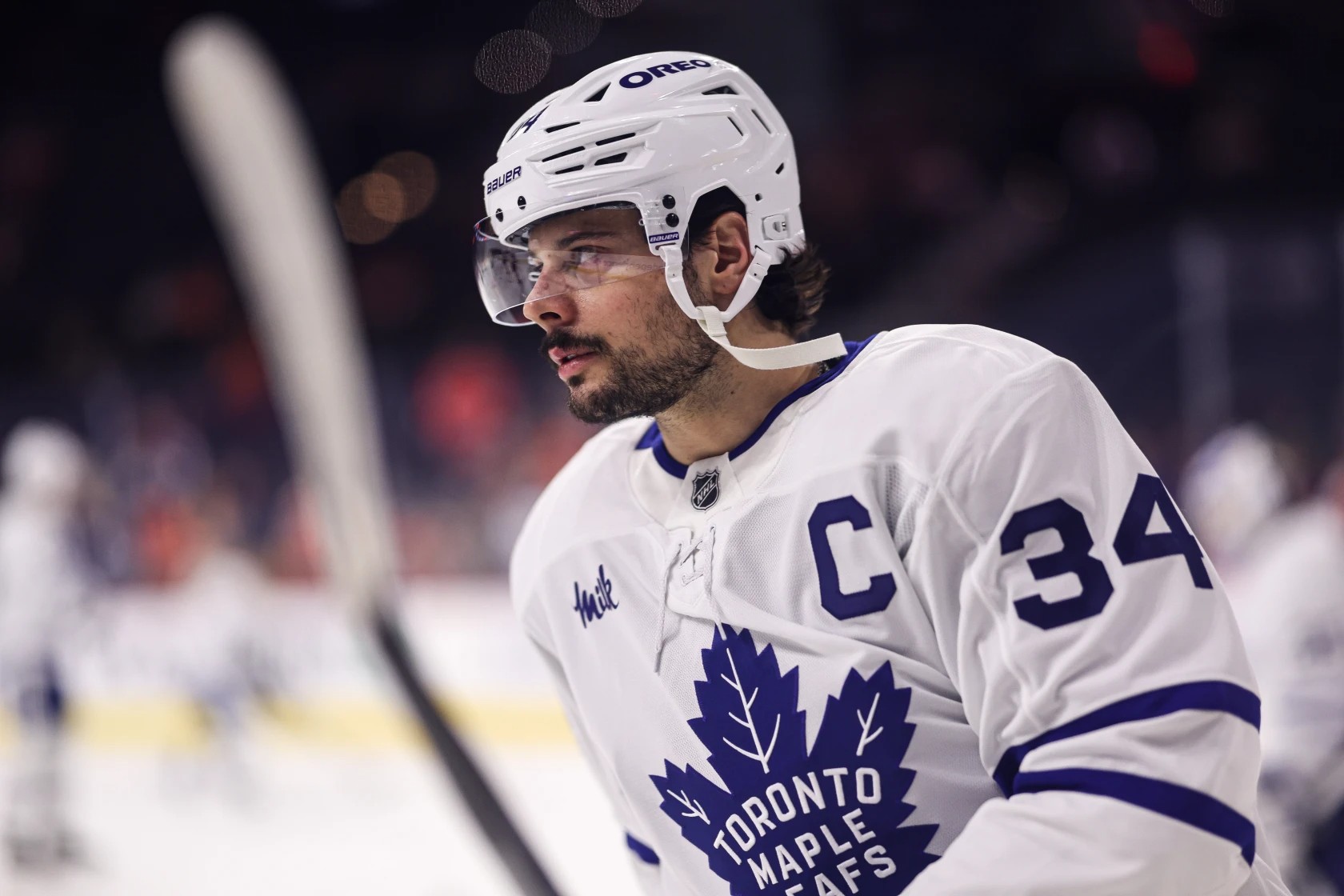
Despite all of the changes we’ve discussed and will discuss in this series — and what you would hope is a much better organizational alignment that actually puts players in positions to succeed throughout the lineup, as we’ll get into in Part 2 — at the end of the day, the buck still stops with Auston Matthews.
It would be unfair to say the top of the roster is exactly the same as previous iterations of this team. Darren Raddysh projects to be one of their most heavily played defensemen, if not the team’s outright leader in ice time. Compared to recent seasons, that’s a significant change in itself. Sergei Bobrovsky is now the starting goaltender and, while it’s fair to wonder which version of Bobrovsky they’ll get, adding a future Hall of Famer is a dramatic change from what the Leafs have run in goal for essentially the past two decades. And then there’s Gavin McKenna, whose role as a rookie remains to be seen but who has every opportunity to climb the depth chart as a franchise cornerstone.
Those aren’t depth changes. They’re major swings at the top of the lineup. But none of it works unless Auston Matthews is Auston Matthews.
The Leafs have added center depth with Nick Paul, Jack Roslovic, Colton Sissons, and Teddy Blueger, but none project as true full-time top-six centers. Nobody in that group is realistically pushing John Tavares down the lineup unless Tavares himself falls off a cliff. He should still be productive, but he’s entering his age-36 season, so expectations need to be in check. There is then a collection of spot-duty centers (including in a top six role if/when necessary due to injury) and checking centers behind him.
The Leafs are now equipped to build a legitimate checking line that can absorb difficult defensive assignments and free Matthews up to some degree. That said, the idea that they’re suddenly going to shelter Matthews like he’s a 20-year-old breaking into the league simply isn’t reality. He’s one of the highest-paid players in hockey and is about to turn 29. He’s going to spend plenty of time against the opposition’s best players, as he should. The real question is whether the Leafs can free him up within reason and hunt favourable matchups — particularly at home — even if it’s only an extra shift each period against a fourth line (it adds up). For a player of Matthews’ calibre, that should be all he needs.
The other question is whether the Leafs can finally surround both Matthews and Tavares with enough quality. Last season, Matthews’ most common five-on-five linemate was Max Domi. No disrespect to Domi, but that’s simply not good enough for a team whose President publicly declared it was in a championship window.
Domi’s status heading into next season is now entirely uncertain. Beyond that, the Leafs have essentially replaced Bobby McMann (pre-deadline), Matias Maccelli, and Nick Robertson with Gavin McKenna, a full-time Easton Cowan, and Jack Roslovic.
On paper, that sounds perfectly reasonable and carries considerably more long-term upside. But if you include Domi and boil the numbers down, Laughton, Järnkrok, McMann, Roy, Domi, Maccelli, and Robertson combined for 80 goals as Leafs last season. Meanwhile, Roslovic, Duhaime, Sissons, Blueger, and Paul combined for 47 goals over the entirety of last season. That’s also comparing full-season production from the newcomers against only what the departing players produced as Leafs (Laughton, Roy, and McMann alone scored 18 goals after leaving Toronto!).
McKenna alone isn’t making up a 33-goal difference just to break even. Most likely, neither is the combination of McKenna and Cowan, particularly when you remember Cowan already scored 11 goals last season that have to be accounted for before you start projecting additional production (You could argue Darren Raddysh’s 22 goals offset Brandon Carlo’s zero, and suddenly those totals look much closer, but comparing different positions/roles, while factoring in a career year, convolutes the situation).
Entering the offseason, my hope was that the Leafs would add a legitimate top-six forward to buy themselves insurance in case either Cowan or McKenna wasn’t immediately ready for that role. They did add Jack Roslovic, who is a good bet to score 20-plus goals, but he’s also played eight NHL seasons without winning his five-on-five minutes once (!). In fact, last season, he merely broke even alongside both Leon Draisaitl (19-19) and Connor McDavid (8-8).
Roslovic brings speed, fills an obvious need as a right shot, chips in goals, can slide to center when required, and has an existing relationship with Matthews that is at least somewhat intriguing. But he’s been in the league long enough that we largely know what he is. Over an 82-game season, he’ll provide a shot in the arm at times offensively, but becoming a true top-six forward would represent a brand new development for a player who has already had plenty of opportunity.
The Leafs are clearly banking on McKenna stepping into the NHL as an immediate difference-maker and on Cowan taking another significant step. AGM Ryan Hardy essentially confirmed as much:
“Maybe, in the years past, in some of these spots, we’ve had more top-six forwards who kind of found themselves in imperfect positions on the third or fourth line. We just looked at it and said, ‘Okay, with Cowan coming back as a young player with a lot of upside, skill, and talent, and now onboarding McKenna, it made sense to establish some clear role definition and have some flexibility within the group that we had.'”
That also reinforces the earlier point about players like Scott Laughton and Nic Roy spending so much time in roles that didn’t really maximize their offensive output. It certainly applies to Nick Robertson, who was clearly unhappy playing down in that role.
By drawing a firmer distinction between the top six and bottom six, the pressure on Matthews only increases. Much like last offseason, the Leafs enter the year with four established top-six forwards. It’s entirely plausible — perhaps even likely — that one or both of McKenna and Cowan establish themselves as legitimate top-six players this season. They are better bets than asking Max Domi or Matias Maccelli to fill those roles. But they are still relative unknowns, and outcomes may vary dramatically.
Truthfully, the other members of the core all produced at strong rates last season. Matthew Knies set a new career high with 66 points. John Tavares finished with 31 goals and 71 points. William Nylander scored at a career-best 1.22 points per game — a 99-point pace over a full season.
Of that group, Matthews was the only one who failed to produce at the level the Leafs needed. He posted a career low in goals per game and the second-least productive season of his career, playing at a 72-point pace over 82 games. That simply isn’t good enough for one of the league’s highest-paid players.
Even if the Leafs’ swings on defense and in goal pay off, if Matthews repeats last season’s offensive production, this entire exercise becomes a fool’s errand. There were certainly mitigating circumstances — as we’ve covered extensively — but he isn’t completely absolved of responsibility, either. To his credit, Matthews admitted after the season that he wasn’t good enough.
If the Leafs played in almost any other division, perhaps they could survive another season like that. But not in the Atlantic. In fact, if they played in almost any other division, I’d feel reasonably confident calling them a playoff team today. But the Atlantic looks like the toughest division in hockey, with razor-thin margins and nearly every team believing it has a legitimate chance to compete — unless Detroit eventually decides to trade Dylan Larkin for futures.
Looking around the division, too many teams simply received better play from their No. 1 center than the Leafs did. Nick Suzuki and Tim Stützle were unquestionably better. Tage Thompson split time between center and wing, but he outperformed Matthews as well. You could even make a reasonable argument for Dylan Larkin, which is honestly a remarkable sentence to write considering Matthews’ stature. Brayden Point dealt with injuries that affected his season before finishing with just one point in Tampa Bay’s playoff series against Montreal. Only Boston and Florida received demonstrably worse play from their No. 1 center, and in Florida’s case that’s because Aleksander Barkov missed the entire season.
The Leafs didn’t have a perfect offseason, but they addressed several major weaknesses. They added legitimate talent on defense. They attempted to stabilize the crease with Bobrovsky, while still having Anthony Stolarz and the promising Artur Akhtyamov behind him. They also rebuilt the bottom six with proper checking forwards to potentially facilitate more favourable deployment for Matthews.
Yes, they didn’t add another proven top-six forward, but there is genuine upside to bet on with both McKenna and Cowan. That’s a much different gamble than hoping Domi suddenly breaks through or Maccelli rebounds from an 18-point season after repeatedly being healthy scratched in Utah. Both youngsters will undoubtedly experience growing pains, but the upside is obvious.
Ultimately, though, Matthews has to drive the bus.
It won’t be Nylander. It won’t be Knies. It won’t be anyone on defense. The only other player you could even squint and imagine carrying this team would be Sergei Bobrovsky somehow turning back the clock.
The organization brought in a coach Matthews is familiar with and has enjoyed success under. It spent significant money in free agency. They are in a position to maneuver the lineup more appropriately now with their personnel.
Teams build around their stars, and that’s nothing new. Now, Matthews has to hold up his end of the bargain. If he does — injuries notwithstanding — I think this is a legitimately good hockey team capable of making the playoffs and making some noise once it gets there.
In Part 2 of the 2026 Offseason Review series, we’ll dive into the minutiae of the Maple Leafs’ roster changes at forward and defense.