




















It sounds like the Maple Leafs will announce a new leader at the top of their chain of command sooner rather than later.
As we’ve worked through the job and the challenges involved — in particular, off the ice — it’s clear that this is a job that will go much deeper than simply finding someone who can make good player personnel decisions (which isn’t easy to find, either!). Rebuilding the front office will require multiple strong hires.
Last season, everything flowed up to Brad Treliving, and despite employing six AGMs, they clearly weren’t up for the work involved. They couldn’t get any trades across the finish line until the last possible moment, resulting in underwhelming returns at the deadline. The coaching staff wasn’t held accountable, save for Marc Savard, who was mercifully let go months after it became clear he had no solutions for the power play. Player development was stalled and/or mismanaged (see: Easton Cowan seeing no game action in February, or Jacob Quillan playing just two pro hockey games in January).
This is a big job with a lot of moving parts. Ultimately, one person will be accountable for the entire operation, but it will take a village to right the ship.
How this translates to the hiring process will be fascinating to watch. Will Keith Pelley hire one person to start — to lead in a presidential capacity — and then have said person conduct GM interviews from there? Are they worried about losing out on candidates, given the Sunny Mehta hire in New Jersey, and will they attempt to hire multiple people at once, namely both a President and a GM?
What makes the most sense to me: An arrangement in which there is a President overseeing the entire operation, setting directions and standards, liaising with the board and the hockey department, and a GM engrossed in the details of the hockey team. They would then build out a proper management team from there.
We will see how it all plays out, but in the meantime, here are the people I would be interested in learning more about:
POHO Candidates
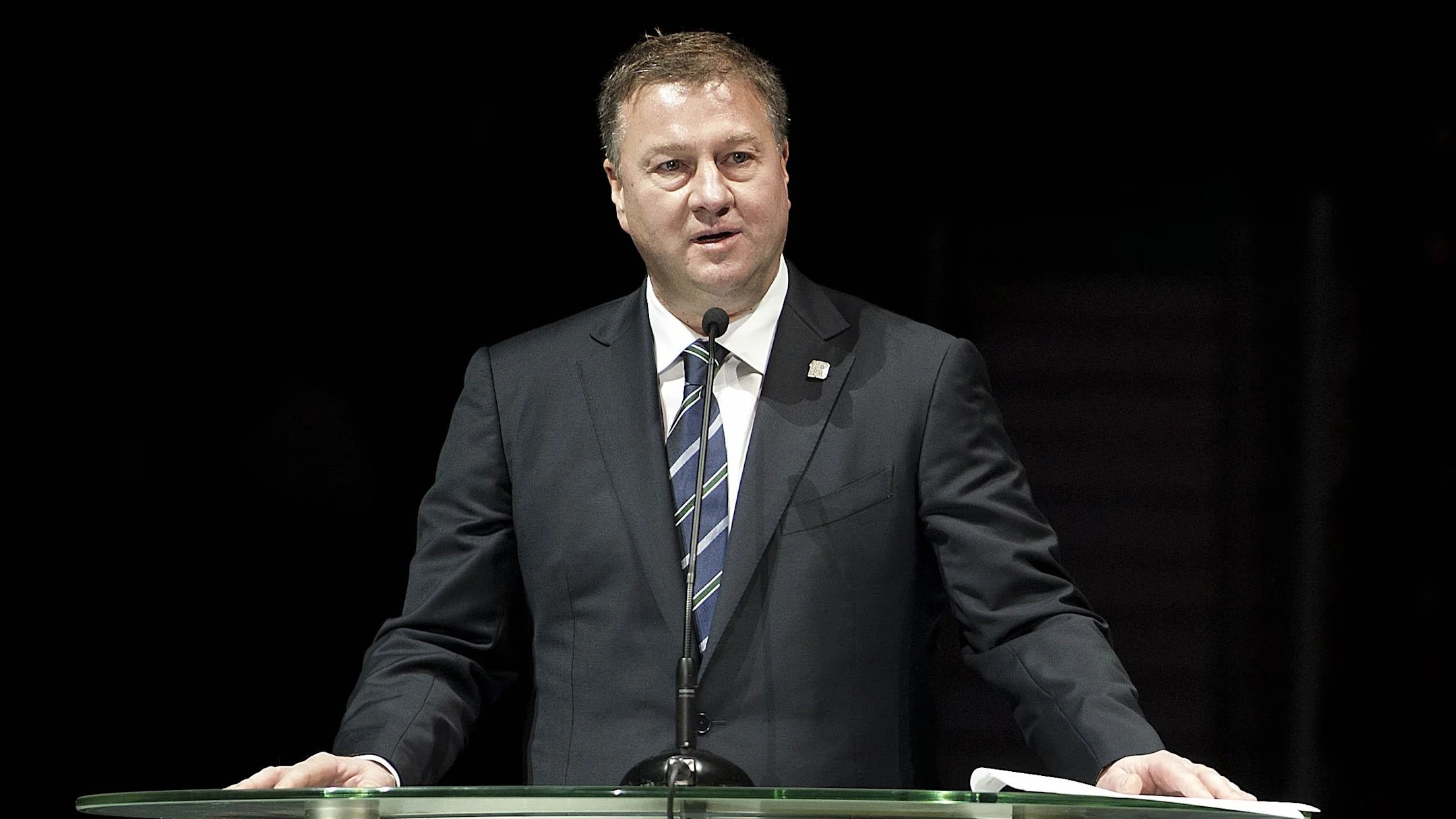
Mike Gillis
Past: President and GM of the Vancouver Canucks, 2008-2014; player agent, 1990-2008
Bio (courtesy BC Hockey):
Mike Gillis is a former hockey executive and professional hockey player. From Sudbury, Ontario, Gillis began to draw attention in the hockey world during his junior career, playing for the Kingston Canadians of the Ontario Major Junior Hockey League (OMJHL). His impressive play in junior led to his selection as the 5th overall pick in the 1978 NHL Draft by the Colorado Rockies.
Gillis’ NHL career spanned from 1978 to 1984, during which he played for the Colorado Rockies and Boston Bruins. Gillis skated in 246 games in the NHL before his on-ice career was unfortunately hampered by injuries, which led to his early retirement from professional hockey.
Transitioning from player to advocate, Gillis earned a law degree from Queen’s University and became a prominent player agent, representing numerous high-profile NHL players and advocating for player rights and better contract terms. His expertise and reputation as an agent paved the way for his transition into an executive role.
In April 2008, Gillis was named the General Manager of the Vancouver Canucks. His tenure was marked by innovative approaches to team management, including advancements in player health and performance analytics. Under his leadership, the Canucks achieved significant success, including back-to-back Presidents’ Trophies in 2011 and 2012 and an appearance in the 2011 Stanley Cup Final. Gillis was awarded the Jim Gregory General Manager of the Year award during the 2011-12 season as the NHL’s top general manager.
What I like:
I heard Gillis speak years ago at the Hockey Coaches Conference, where he said the following about the kind of role he’d be interested in, which I believe aligns with the Leafs’ current job and what it entails:
“I do [want to return to the NHL], but in a fairly specific role. I’m really interested in analytics, sports science, human performance, and how to blend those things into a high-functioning organization. As a general manager of a team you’re really myopic, really focused on your team performance, individual performance, coaching performance, and I like that part of the job. But right now I’m a little more interested in how you build an organization and how you see results, how you measure results, and being really high functioning.”
In a nutshell, this is the job for him. Someone needs to be the point guard for this operation, make significantly better use of the Leafs’ resources, put the right people in place, set direction and standards, and, from there, the proper decision-making, development, and culture should hopefully follow. The Leafs clearly lacked leadership at the top of their organization last season, and Gillis has the right idea of what the top of the food chain should look like and a demonstrated ability to drive organizational success.
Gillis took over a Canucks team that wasn’t too far off this current Leafs team: missed the playoffs, had some successful regular seasons before then but went nowhere in the playoffs, and the Sedins were 28 years old at the time (Auston Matthews’ current age). It wasn’t a team or core that most observers believed was destined for great things. Gillis shifted player usage, made smart personnel decisions, and found off-ice advantages related to sleep and travel for his West Coast team. The Canucks went to the Cup and won back-to-back Presidents’ Trophies. It’s not the ultimate prize, of course, but it’s about as close as you can get without winning it all. The Cup finalist Canucks team ranked first in the league in goals per game, goals against per game, power-play percentage, and third on the penalty kill — in other words, about as dominant as it gets.
Past experience in a Canadian market is also a plus.
What gives me pause:
Gillis hasn’t been in the league since 2014. While my read of the online discourse is that some fans worry that nobody else has hired him, it doesn’t bother me too much. He is looking for a specific opportunity and isn’t settling; plus, he spent a good chunk of time traveling and educating himself about other sports and leagues.
Where it might be a concern, though, is that it’s fair to question how well he knows the current NHL. You can’t take this job and spend a season reacquainting yourself with the league. I have spent some time poring over Gillis’ interviews over the years; he made a comment following the JT Miller trade that he wasn’t familiar enough with the players to offer a valid opinion. Now, it’s possible he just doesn’t rate the players highly and was trying to be polite rather than slagging them publicly, but it’s certainly fair to question how dialed in he is to the league and how prepared he is to hit the ground running.
The other knock on Gillis is his draft record with the Canucks. He hit on Bo Horvat as a top-10 pick, but beyond Horvat, Vancouver drafted Cody Hodgson and one-time Leaf Ben Hutton as their best picks over a six-year period under Gillis’ watch. Gillis has been open about the drafting failures and appears to have ideas on how to improve it, but they weren’t even close in his first go-round, so it’s a significant question mark.
There is also the matter of Gillis’ personality, viewed by some as prickly or abrasive at times. As gratifying (and potentially beneficial) as it is to picture a no-nonsense Leafs President putting non-hockey people in their place, particularly amid recent concerns about Keith Pelley’s possible involvement in hockey decisions, there is no getting around the reality that navigating those board politics with tact and diplomacy is also critical to achieving long-term goals in Toronto.
Gillis is turning 68 years old this year. It’s fair to wonder if he can still handle a job like this, especially after he’s been detached from it for so long.
Dean Lombardi
Current: Senior Advisor, Philadelphia Flyers
Past: President and GM of the LA Kings; GM of the San Jose Sharks; scout for the Philadelphia Flyers; GM of the Minnesota North Stars
Bio:
Dean Lombardi’s career in hockey spans four decades, beginning as a player agent before becoming the AGM of the Minnesota North Stars from 1988 to 1990. He moved to the then-expansion San Jose Sharks and eventually became their GM in 1996, a position he held for seven years. Lombardi spent two seasons as a professional scout for the Philadelphia Flyers (2003-04, 2005-06) before becoming the President and GM of the LA Kings, where he was the architect of two Stanley Cup champions and became the GM of Team USA for the World Cup of Hockey. Following his time with the Kings, he returned to the Flyers as a Senior Advisor.
What I like:
Lombardi has experience developing a top-notch organization and is big on creating a family-like atmosphere wherever he works, something I appreciate and believe has been lacking in Toronto. If the job description is about overseeing the management group and creating the right environment, Lombardi has shown he can succeed in this capacity.
The job itself won’t be too big for him, and he’s a veteran, steady hand who drafted extremely well with LA and made significant trades to put his team over the top. The Kings added players such as Jarret Stoll and Mike Greene, whom Lombardi referred to as culture-setters, and took steps from there to build the team’s identity. The style of play wasn’t necessarily exciting, but it was successful. The Kings of this era grinded and cycled better than any team and dressed many mean and nasty characters. In essence, Lombardi set out a plan, stuck to it, and won it all.
What gives me pause:
A decade ago, Dean Lombardi said the following about hockey analytics:
Lombardi had an interesting observation about the young guns, about how they operate and what prompts owners to hire them.
“They’re a lot of Wall Street guys,” he said. “They like the idea of being in control. That’s what those Wall Street analysts do.
“They convince you that the spreadsheet tells you this is going to happen. Owners have Wall Street guys come in and say, ‘See this is going to guarantee you’re going to win.’ They fall in love with it because it looks like it is statistically verifiable.”
Such owners speak the same language as the Wall Street types. They are more comfortable with them than with tobacco-chewing old ballplayers.
No owner in sports was more tuned in to numbers than the late Dr. Jerry Buss, who had so much success with the Lakers. He did not hobble or distract his basketball people with analytics.
Lombardi talked about the culture of winning.
“When you go into a locker room, you know it,” he said. “It’s not a statistic. You can’t put a number on it. You can’t verify it. You only know it when you see it and feel it. You’re talking about the human element.”
While I don’t think Lombardi is necessarily wrong, I don’t think he’s fully right, either. Of course, he could’ve changed his mind since then — this was a very long time ago — but I’d bet he generally feels similarly to this day. Like it or loathe it, MLSE is a corporation. The Leafs’ job requires ability and diplomacy to manage “up” and deal with a board. Constantly clashing with them will create unnecessary friction and will not end well for anyone.
Lombardi’s LA teams reached the top of the mountain, but they also fizzled afterward, leaving the next GM a mess to inherit. The Mike Richards situation was an unnecessary ordeal that was handled particularly poorly.
Lombardi has been keeping busy in the league, but he hasn’t been a meaningful decision-maker in nearly a decade. Like Gillis, he’s 68.
A last note on the President search: Of course, I would search the league to see if I can poach a great candidate for this role as well, but it’s hard to talk about poaching a current GM or President with any sort of credibility. Doug Armstrong is sort of an in-between because he’s transitioning roles. It would make sense to talk to him, but it doesn’t appear his owner has any interest in letting him go. With that in mind, I wouldn’t jump through hoops or break through any walls to hire him. Otherwise, yes, Armstrong is worth approaching, given his experience managing from the top and his success in the league.
The GM Search
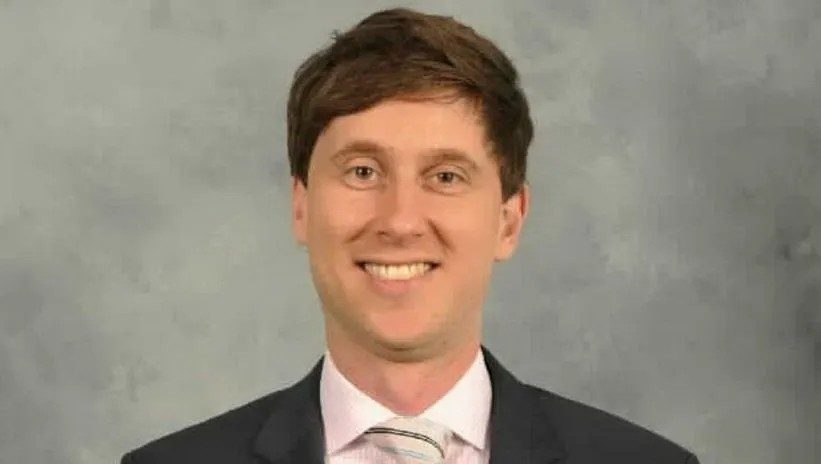
Evan Gold
Current: Assistant General Manager with the Boston Bruins
Past: Director of Legal Affairs with the Boston Bruins
Bio (courtesy of the Boston Bruins):
Evan Gold is in his 11th season in the Bruins organization, as he was named the Director of Legal Affairs in October 2015. He assumed the additional position as Assistant General Manager at the start of the 2019-20 season, and he also formally took on the responsibility of General Manager of AHL Providence on March 29, 2023. In those positions, he advises and assists General Manager Don Sweeney with day-to-day hockey operations tasks, including salary cap analysis, contract negotiations, roster planning, player salary arbitration, CBA compliance, and pro scouting. He also assists in the oversight of individuals in their specific duties. He joined the Bruins after spending eight-plus years with the Capitals as a Hockey Operations Assistant. While in the Washington front office, his responsibilities included contract research, salary cap analysis, arbitration research, and brief drafting. He completed his undergraduate work at McGill University before earning his law and MBA degrees at the University of Toronto.
What I like:
Gold, highly regarded in hockey circles, has become a key cog for a Bruins franchise that has generally maintained a high standard for over a decade, including one Stanley Cup Finals appearance. Gold oversees the AHL team, which finished first in the league and employed the coach of the year. They’ve also found talent from other AHL teams lately who have gone on to help the Bruins, including Alex Steeves and Jonathan Aspirot.
Experience in an organization that has generally excelled and upholds high standards is a big positive, and you’d hope some of it would rub off on the Leafs. The Bruins haven’t been shy about making big moves or moving on from players they don’t believe align with their philosophies, regardless of their talent level. Poaching talent from a division rival is also generally a positive.
What gives me pause:
Gold has been the AHL GM for three years now, but he’s still rather inexperienced overall, as the bulk of his career was more geared towards legal affairs. He doesn’t have much experience in scouting, player evaluation, and so on. There’s no question that Gold is incredibly booksmart, but that doesn’t always translate to the intricacies of team dynamics, player evaluation, and team building.
Scott White
Current: Assistant General Manager of the Dallas Stars and GM of the Texas Stars
Past: Scout and Director of Minor League Operations with the Dallas Stars; ECHL head coach
Bio (courtesy of the Dallas Stars):
Scott White is in his 11th season as assistant general manager, while he also serves as the general manager for the Texas Stars, Dallas’ development affiliate in the American Hockey League (AHL). The only GM in Texas Stars history, White was the architect behind the 2014 Calder Cup-winning club that set a franchise record with 48 wins, claiming the MacGregor Kilpatrick Trophy as the AHL’s regular-season points champion. He also manufactured the team’s second John D. Chick Trophy win (West Division champions) in 2018 as Texas again reached the Calder Cup Final. White was selected by Hockey Canada to serve as a member of the management group for Canada’s National Men’s Team at the 2014 Deutschland Cup and 2014 Spengler Cup.
A member of the Dallas Stars organization since 2005, White previously served as a professional scout and director of minor league operations. He headed up the hockey department for the Iowa Stars, Dallas’ then-primary affiliate, for three seasons. Prior to joining the Stars organization, he served as head coach of the Columbia Inferno of the ECHL for four seasons, qualifying for a playoff berth each year. He also guided Columbia to a Kelly Cup Final appearance in 2003 and finished with a 165-87-36 record with the Inferno. White also worked as an assistant coach with the ECHL’s Greensboro Monarchs for a season and a half. In college, White played hockey for Michigan Tech University from 1985-89 and was an assistant coach from 1995-99. He was inducted into the Michigan Tech Sports Hall of Fame in 2016.
What I like:
To keep it short, I like how the Dallas Stars run their business. They’ve made great, big-time trades over the years, be it Jason Spezza, Tyler Seguin, or Mikko Rantanen. They’ve also been able to rebuild their team with home runs on later draft picks, including Wyatt Johnston, Roope Hintz, and Jason Robertson. The Stars have a good development model and have been able to develop the likes of Thomas Harley, Mavrik Bourque, and Justin Hryckowian within their system, an area where the Leafs have clearly struggled of late. While the Stars haven’t ultimately won a Cup, they’ve been in the hunt for a very long time and have turned over their franchise multiple times while staying in contention, a testament to their entire operation.
White is also a former colleague of current Leafs Director of Amateur Scouting Mark Leach, so some built-in familiarity within the organization is always a bonus.
What gives me pause:
An understudy of Jim Nill is always appealing, and on the surface, there is very little giving me pause. The Stars are well-run in all departments, be it scouting, development, or their NHL roster management. The question would be how much of it White has been truly responsible for. Several players, of various pedigrees, have graduated from the AHL team, so White receives credit for it without question, but actually scouting and drafting players, working on the big trades, and signing the big contract extensions? These are all unknowns until you talk to White and those around him.