













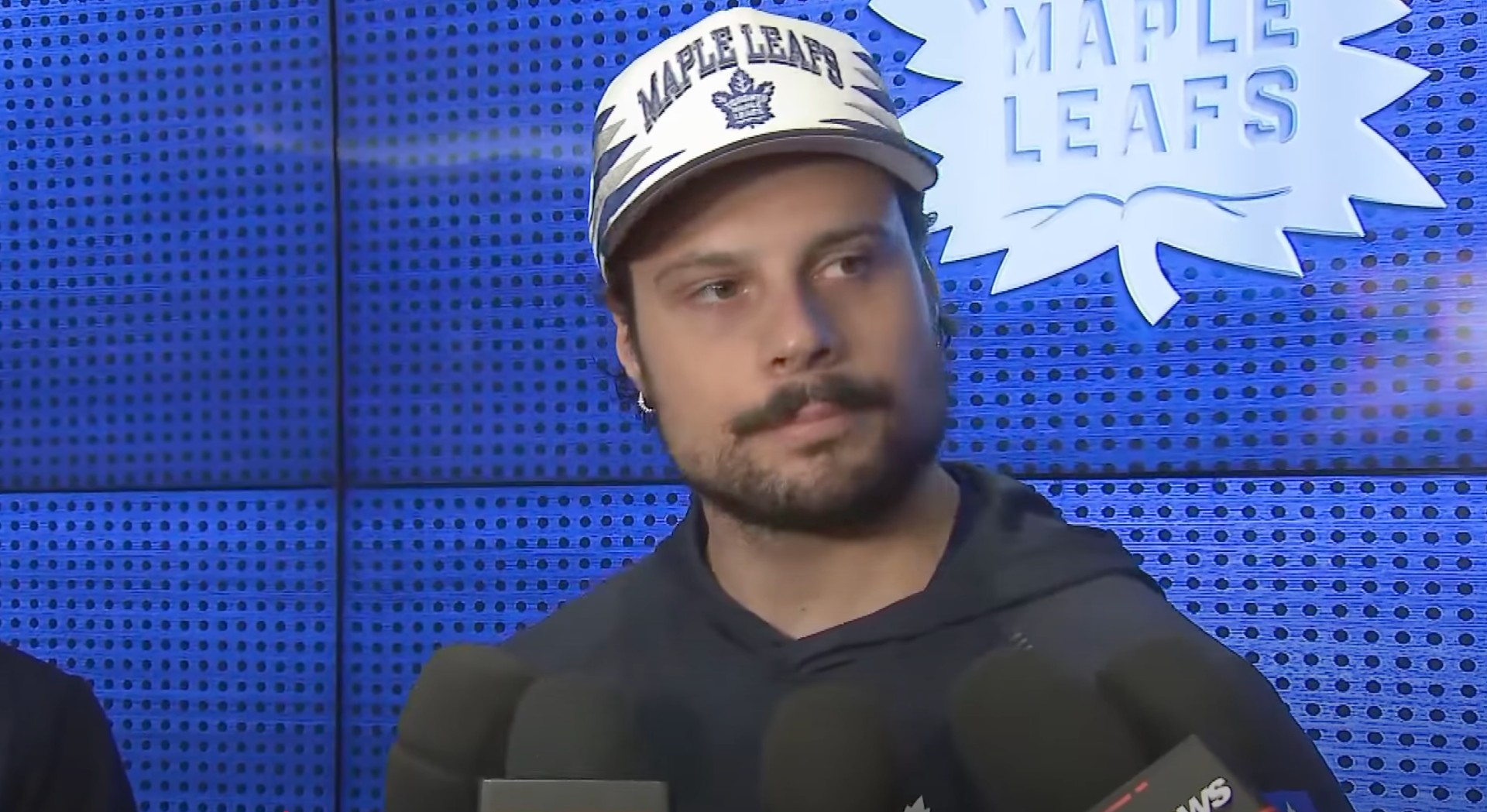
On locker cleanout day, captain Auston Matthews discussed the team’s failure this season, his future with the organization, and the current uncertainty at the management level.
Opening Statement: Matthews on the failed 2025-26 season
Matthews: Before we get going, this was a tough year and a frustrating year. We didn’t meet the goals or expectations we set out at the start. Ultimately, that is on me. That is on us as players. We’re the ones who have to go out there, compete, and play the game. We didn’t do that well enough consistently enough this year to put ourselves in a better spot.
We love our fans. We appreciate our fans. I think we understand their frustration. We wear that alongside them. I think everybody here wants to win and wants to do their part to help the team win.
I love being the captain of this team. I think it is an incredible honour to wake up every day and wear this jersey. That is not lost on me, even despite the circumstances and the way this season went.
Q&A
A lot of people are projecting their thoughts onto what you think of the future of the franchise and your place within it. How do you view your future with the Leafs moving forward?
Matthews: I can’t predict the future. There are steps that have to take place. They’ve got to hire new leadership in management. I don’t really know. I can’t really predict the future.
For yourself personally, is this a place you want to be? Would you reject any suggestion that you should not be here for the remainder of your contract?
Matthews: There is always noise and chatter. Personally, I really don’t pay attention to all of that. I really just focus on myself, this team, and trying to be a part of the solution.
Is there anything you need or want to hear from the next GM to have the confidence to stay around?
Matthews: I don’t know if there is anything specific. Those conversations are going to be personal and private. We aren’t even at that point yet, obviously. We are still in the search phase, you could say, for them. When the time comes, those conversations will just happen organically.
Do you still think you can win here?
Matthews: I do.
What gives you that belief?
Matthews: I believe in the guys in this room and the people we have here. We are going to hire new leadership and management. There will be changes. That is just the way things go. But I think we’re all hopeful this is just a one-off.
You’ve seen it happen to a couple of teams. Boston is obviously the latest example, but you kind of hope you can bounce back and be in a better situation than we were this year.
Would you be on board with a one-year retool?
Matthews: I mean, I don’t know what that means. I think you have to have a clearer understanding of what that means — retool, rebuild, or whatever that is. That is something that will be up to the new management we end up hiring, and we’ll go from there.
Is it frustrating at all that you’re onto your fourth GM and possibly fourth coach in your 10 years here?
Matthews: I don’t think that is completely abnormal, if you look around the league and at each individual team. There is always change after each season. There are 31 teams that go home not happy about how their season went, but for us personally, as I said earlier, we take that accountability as players because we are the ones who have to go out and play.
Unfortunately, when we don’t do that well enough, and we don’t meet those goals and expectations, people are let go and lose their jobs, and there is change. That is on us, for sure.
Keith Pelley mentioned leaning heavily into AI. In emphasizing that kind of data, do you understand what he is talking about and its application in sports?
Matthews: Yeah, a little bit. I think AI is a very big, vague statement, but there is a lot of data that we have now with technology and AI that can be used for a lot of positive things. I am not sure it is the answer to everything, obviously, but there are a lot of things that can be done through that kind of system, where it can give you advantages in certain areas, not just on the ice but off the ice with training and so on.
What is your relationship with Craig Berube, and how do you feel about how you were used on the ice this season?
Matthews: I have a great relationship with Chief. I have a ton of respect for him. In the end, the coaches make the decisions on how they feel it will help the team win. For myself, as a player, I just try to go out there, execute, and play my game, no matter what the situation is or the usage is. My job is to go out there, compete, and produce. That (other) stuff comes second.
How did you interpret the Radko Gudas incident and the lack of a response from your teammates?
Matthews: It was an unfortunate play. I thought they responded in the third period. But it is an unfortunate play.
What did you think of the hit? What did you and Radko talk about afterward? He mentioned he messaged you.
Matthews: I think you probably know how I felt about the hit. Up until a couple of days ago, I was on crutches. I didn’t think I was going to be standing here today. It’s going well so far.
Him reaching out is a personal conversation and whatnot, but as I said, I think you know how I feel about the hit.
How is the rehab, and will you be ready for next season?
Matthews: It’s going well. Really good. I’ll be ready by next season. I’ll have a pretty normal summer, for the most part. I’m about a month down now. It’s a couple more months before I can start to turn it up a little bit.
How did you feel physically prior to the knee injury?
Matthews: I felt good. Coming back from the Olympics, it was tough. You’re riding a very big emotional high, and then you’re trying to get back into it, continuing to play and not really getting a break, and there is the travel and all of that stuff. I found it kind of hard to get my game going back after the Olympics for a little bit.
When you look back at the season, where do you think things went wrong?
Matthews: I don’t know. That is a more complicated question than I can really answer. Just the level of consistency we didn’t play with hurt. We had really good stretches of hockey throughout the year. We put together some good games, but the consistency, night after night, wasn’t there.
This is a city that blames GMs and coaches much more than players or single out players. Why do you think this market is so hard on management and coaches?
Matthews: I don’t know if I agree with that. I can’t answer that question, sorry.
You went from captaining a gold-medal team at the Olympics to getting knocked out of the NHL season and then watching the team lose its final seven games. What has the emotional rollercoaster been like?
Matthews: I think that can kind of sum up the whole season, to be honest. There were a lot of ups and downs — probably more downs than ups — but I think it is a privilege to play in this league. It is a tremendous honour to wear this jersey. Despite going through ups and downs, that kind of thing is definitely never lost on me.
What do you think the biggest reason is for the team’s fall from where it was last year to this year?
Matthews: Again, that is more complicated than I can really give an answer for. There are a number of different things. In the end, consistency was just a big issue.