






















The Toronto Maple Leafs find themselves in an unusual position this offseason.
A full-scale rebuild was always going to be tough to get behind, given their lack of future first-round picks, but the organization needs to be at least a little careful in light of last season’s results. The front office needs a strategy that acknowledges both realities and leverages the flexibility afforded by significant cap space.
Winning the Gavin McKenna sweepstakes was not enough to trigger a full rebuild, as a future core of McKenna, Matthew Knies, Easton Cowan, and Ben Danford simply does not provide enough certainty to justify tearing everything down. You want several top-10 picks arriving together to follow the blueprint that most successful rebuilds require, and we’ve seen teams struggle to have immediate success around other first-overall picks like Owen Power, Rasmus Dahlin, Alexis Lafrenière, and Connor Bedard. Perhaps a home-run trade offer for Auston Matthews would have changed the equation, but given his term, cap hit, and no-move clause, getting that type of offer is much easier said than done.
The Leafs will certainly try to make the playoffs next season, but they simply can’t be in full “go-for-it” mode. They finished 28th in the standings last year, and you’re certainly not expecting to get the best version of Gavin McKenna in Year 1. Given their lack of future first-round picks, their ability to add significant help at future trade deadlines is already constrained.
If Toronto’s long-term outlook is strongest in Years 2, 3, and 4 of McKenna’s career, then the organization’s decisions should reflect that timeline rather than treating 2026-27 as a championship-or-bust season. That does not mean sacrificing competitiveness, as the goal is clearly to get back to the playoffs next season, but they should be willing to make small sacrifices in the short term if those moves strengthen the roster over the medium term. With significant cap space available, Toronto can afford to overpay for short-term free agents on one- or two-year contracts. The goal should be to continuously convert expiring value into future assets while maintaining a competitive NHL roster.
The Leafs should also listen to offers on players on attractive short-term contracts. While I’m still not entirely sure what to make of the Joseph Woll trade in the short term, he only has two years left on his deal, so the move aligns with that line of thinking. Brandon Carlo is a one-year rental at this point and, following the Darren Raddysh signing, seems more likely to be traded. There’s no need to force an Oliver Ekman-Larsson trade, as he can certainly help them next season, but you at least have to explore cashing in now. Teams right up against the cap should be willing to pay a bit of a haul for Ekman-Larsson, as they can’t spend heavily in free agency as the Leafs can.
The Leafs still have plenty of cap space, and this team is bound to look far more competitive once they finish spending. Still, the overall strategy is a middle path between rebuilding and going all-in. Adding picks and prospects can help the long-term outlook, but it also gives John Chayka the opportunity to be aggressive at the trade deadline if this team exceeds expectations.
Jim Hiller
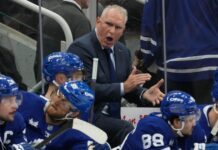
I’ve seen a lot of negativity on my timeline regarding the Jim Hiller hire, and I don’t really understand it. A month ago, someone asked me who I wanted behind the Leafs bench, and my answer was Bruce Cassidy or Jim Hiller. In general, I find coaching hires difficult to evaluate, as most of us on the outside, myself included, don’t have enough information to confidently predict who will succeed and who won’t. That said, the results and underlying numbers from Hiller’s time in Los Angeles really jump off the page.
Part of the fanbase would have liked a bigger name, such as Patrick Roy or John Tortorella. Another segment would have liked the excitement and mystery that come with a new coach like Joel Pavelski. Hiller doesn’t really fit either category, but his track record deserves more respect than it’s getting. Objectively, there is a lot to like.
Over the last two seasons, the Kings ranked fourth in the NHL in expected-goal percentage and third in actual goal percentage. That’s elite territory and, frankly, far better than that roster should have been. Hiller also had tremendous power-play success during his previous stint with the Maple Leafs. He already knows many of Toronto’s core players, and it’s reasonable to assume those relationships are positive. He also isn’t a first-time head coach, which carries some value in a market like Toronto, where the pressure and scrutiny are unlike almost anywhere else in hockey, and the two heads of the executive team are relatively light on experience.
Most of the criticism seems to stem from his playoff record, but context matters. The Kings ran into Connor McDavid and Leon Draisaitl, who have made a habit of turning good teams into casualties. I saw complaints that Hiller played Cody Ceci too much, but so has every coach ever. I also saw concerns that Hiller is too defensive-minded, even though Babcock used to talk about him as more of an offense-focused coach.
The results are what matter, and if Hiller can turn the Maple Leafs into a top-five expected-goals team, I don’t particularly care how he gets there. Toronto was dreadful defensively last season and desperately needs structure, accountability, and improvement in its own zone.
Emil Andrae for Joseph Woll
Let’s start with the positive side of the trade.
The Leafs desperately needed more puck movement from their blue line. Last season, Simon Benoit’s results were atrocious, and the trio of Benoit, Brandon Carlo, and Philippe Myers combined for just two primary points. For years, Toronto dominated its third-pair minutes because those units could move the puck and tilt the ice in sheltered situations. They no longer had players like Rasmus Sandin and Mark Giordano filling those roles, as Oliver Ekman-Larsson was often forced higher up the lineup.
Quite frankly, it was time to move on from Benoit. The Leafs needed to improve their puck movement, and they needed to do it badly. Ignoring the acquisition cost for a moment, I like what Emil Andrae brings to the table. He sees the ice well, moves the puck efficiently, and has produced impressive results whenever he’s been given opportunities. He can play on both sides, and despite not being the biggest defenseman, he competes hard and plays with more physicality than you’d expect. In a lot of ways, he reminds me of Sandin.
I was surprised the Leafs chose to move Joseph Woll, but Anthony Stolarz would have been difficult to trade given his injury history, and, when healthy, there’s a legitimate argument that he’s the better goaltender. That said, moving Woll is still a significant gamble, assuming they don’t add another starting-calibre goaltender.
Part of the calculation may be timing. Woll only has two years remaining on his contract, and if the organization wasn’t planning to commit significant money to Woll when that contract expires, perhaps this was the right time to extract value and address another area of need.
If the Leafs do not make a big splash in the goaltending market, this trade could largely hinge on Stolarz’s health. If Stolarz can stay healthy and look like a solid starter again, the trade becomes easier to justify, and it’s worth noting that the additional cap flexibility created by moving Woll provides opportunities to improve the roster elsewhere. Still, there’s an undeniable risk attached to that bet given Stolarz’s injury track record, as this is a team that will likely require above-average goaltending to make any sort of real playoff push.
The hope is that one of Dennis Hildeby or Artur Akhtyamov can emerge as a legitimate NHL option and fill the “1B” goaltending role that Woll occupied. You can typically add an undersized third-pairing defenseman at a fairly low cost, so in order for this trade to be a win for the Leafs, Andrae needs to prove that he can be a high-end third-pairing player who can step up into the top four when needed. Toronto’s forwards struggled defensively last season, while the defense corps struggled to generate offense. Adding Andrae, along with Darren Raddysh, goes a long way toward addressing the latter issue.
For now, I’m firmly in wait-and-see mode. I understand the logic behind the move, and I can see a path that works well for Toronto. At the same time, giving up a goaltender of Woll’s calibre is not something to gloss over. There are simply so many factors that will determine the outcome, including Stolarz’s health, the development of the organization’s goalie prospects, whether they make another splash in the goaltending market themselves, and whether Andrae becomes the player the Leafs clearly believe he can be.
Darren Raddysh
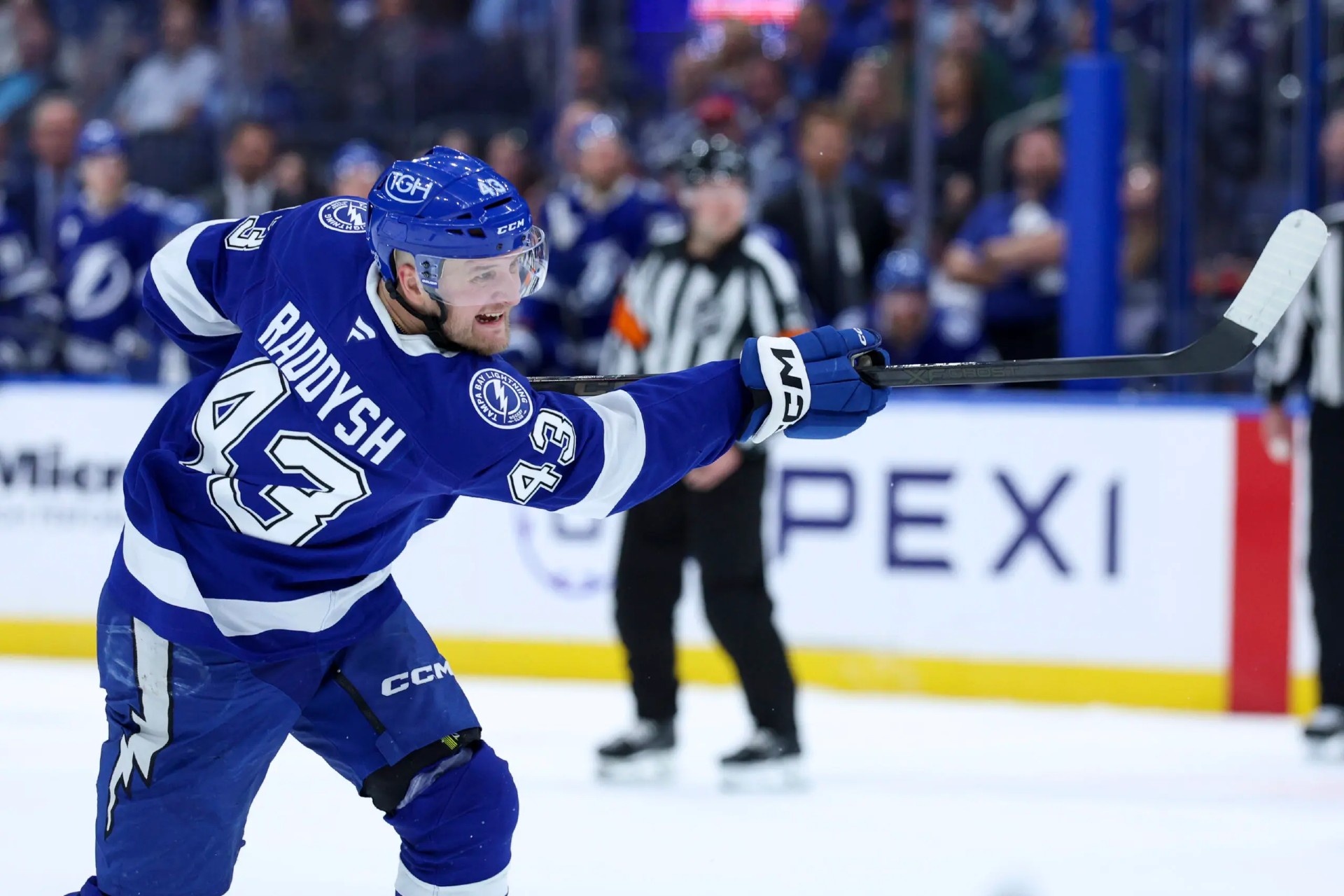
Large free-agent contracts typically come with short-to-medium-term benefits and long-term risk. This deal is no exception, and while it remains to be seen whether Raddysh will be a wise investment, it’s easy to understand why the new front office took a swing. At some point, this team needed to acquire high-end talent in free agency. They can’t solve every roster issue through trades, especially when trade assets are limited.
Brad Treliving struck out on the big names last offseason, and this year’s class wasn’t overly deep. Alex Tuch, the best free-agent forward on the market, seems bound to be even more expensive, and short-term alternatives like John Carlson may prefer to play south of the border. Raddysh should improve the roster significantly for at least the next three to four years, and if the Leafs don’t have success during that time, Chayka probably isn’t going to be here when the deal could go south.
The upside here is obvious, as Raddysh was one of the most productive defensemen in the NHL last season. Among all NHL blueliners, he ranked seventh in points per game, trailing only Evan Bouchard, Zach Werenski, Cale Makar, Quinn Hughes, Adam Fox, and Rasmus Dahlin. That’s elite company, and while this could end up being the best year of his career, you don’t just totally luck into that type of season. It’s almost impossible to add someone coming off that production via trade.
Raddysh scored at a 79-point pace, and a Toronto defenseman hasn’t produced at that point-per-game rate since the 1970s. Even if he regresses and settles closer to a 60-65-point pace, that would still represent outstanding production from the back end. Tampa Bay posted excellent results during Raddysh’s five-on-five minutes last season, both in terms of expected-goal percentage and actual goal percentage, so there is legitimate two-way value here. More importantly, this addresses one of Toronto’s most glaring weaknesses, as — to repeat myself again — the Leafs’ puck movement from the blue line was dreadful last season.
The contract itself looks more manageable when viewed through the lens of a rising salary cap. An $8.5 million cap hit feels significant today, but the cap is projected to climb to roughly $113.5 million by 2027-28 after sitting at $95.5 million just last season. That’s about a 19 percent increase in just two years, so when adjusted for cap growth, Raddysh’s cap hit will soon feel closer to that of a $7 million defenseman in last year’s environment.
The short track record is a legitimate concern, but he was borderline elite last season, not just good. There’s room for meaningful regression while still providing value on an $8.5 million cap hit. There’s also the reality that Tampa Bay has one of the smartest front offices in hockey, and they were willing to let him walk, but the same thing was said when the Leafs signed Oliver Ekman-Larsson.
The timeline fit is my top concern here, as Raddysh’s decline years will overlap with Gavin McKenna’s prime. However, you can’t really rebuild given the lack of draft picks, and the rest of your core wants to go for it next season. The most valuable years of McKenna’s Leafs tenure could end up being his entry-level years, so I get the drive to compete right now. We’ll see if they end up making a major move in net, but if you’re pushing your chips in with a signing like Raddysh, you probably want your goaltending approach to align with that strategy.
Overall, I understand the bet. The Leafs are unquestionably a better team today than they were before the signing, as they added a high-end player, addressed a major weakness, and didn’t have to surrender any trade assets to do it. The short-term outlook looks much brighter, and this team should look like a playoff roster again once they spend to the cap.
The final years could obviously become problematic, but if you’re going to commit to building around Matthews, you need to take on some risk. Perhaps Raddysh ages gracefully and the final years are perfectly fine, or perhaps he ends his Leafs tenure on LTIR. Nobody wants to rely on that outcome, but it’s a real possibility that the final years don’t play out exactly as they appear on signing day.
Final Thoughts
This is shaping up to be a highly entertaining offseason in Toronto. The Leafs have already won the draft lottery and signed the free agent who scored the most points last season. Morgan Rielly seems bound for a trade, and I think they’ll at least listen to offers on Carlo and Ekman-Larsson. They have plenty of cap space and fully intend to use it.
They need to make a significant investment at center. Maybe it’s Ontario-born Boone Jenner in free agency, or maybe it’s Elias Pettersson via trade, but something is going to happen there. I like Jack Drury of the Colorado Avalanche if they go the cheaper route, and I’m all for paying a premium on short-term free-agent deals. The Leafs need a right-shot wing or two, and if I’m someone like Oliver Bjorkstrand, I’m trying to rebuild my value in a market that tends to get players paid.
Get your popcorn ready.